Introduction
Martin Luther King Jr. remains a pivotal figure in American history, symbolising the struggle for civil rights and social justice. His nonviolent approach to activism brought global attention to racial inequality in the United States, particularly during the 1960s. Recently, the relevance of his teachings has resurfaced in discussions surrounding contemporary social movements, drawing parallels between past and present struggles for equality.
The Life and Work of Martin Luther King Jr.
Born on January 15, 1929, in Atlanta, Georgia, Martin Luther King Jr. was the son of a pastor and emerged as a prominent leader in the American civil rights movement. His initial rise to national prominence began with the Montgomery Bus Boycott in 1955, a grassroots protest against racial segregation in public transport that ignited the American civil rights movement.
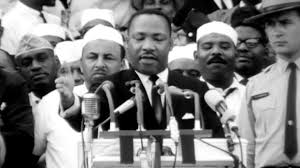
King’s philosophy of nonviolence was deeply influenced by Mahatma Gandhi, emphasising peaceful resistance as a means to effect change. His leadership in the Southern Christian Leadership Conference (SCLC) allowed him to orchestrate pivotal events such as the Birmingham Campaign and the March on Washington in 1963, where he delivered his iconic “I Have a Dream” speech. This speech articulated his vision of a racially integrated and harmonious America, inspiring countless individuals and communities.
Recent Developments and Relevance Today
In recent years, King’s legacy has gained renewed attention amid ongoing social justice movements advocating for racial equality and systemic change. The Black Lives Matter movement, ignited by incidents of police violence against Black individuals, resonates with the themes of King’s work and his calls for justice. Public demonstrations, inspired by King’s teachings of nonviolent resistance, have spread globally, reflecting his profound impact on contemporary activism.
Moreover, educational initiatives and commemorative events related to King are increasingly common, with institutions aiming to pass on his teachings to future generations. This resurgence underscores the continuing battle against racism and inequality, illustrating that King’s vision is yet to be fully realised.
Conclusion
The significance of Martin Luther King Jr.’s work continues to resonate today, offering guidance and inspiration for those fighting for justice and equality. As society navigates complex issues of race, injustice, and inclusion, King’s principles serve as a powerful reminder of the power of nonviolent protest and the importance of solidarity in the pursuit of human rights. His legacy persists, urging both reflection and action, and reminding us that the dream of equality requires unwavering commitment from all of us.