Introduction
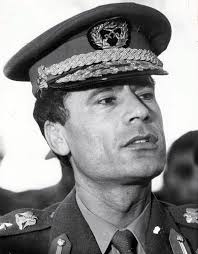
The name Muammar Gaddafi is synonymous with a complex legacy characterised by both revolutionary fervour and global controversy. Gaddafi ruled Libya for over four decades, from 1969 until his brutal ousting and death in 2011 during the civil uprising. His leadership style, backed by a unique vision of socialism and Pan-Arabism, profoundly shaped Libya and had significant implications on global geopolitics.
Gaddafi’s Rise to Power
Born in 1942 in a Bedouin tent near Sirt, Libya, Gaddafi’s early life was marked by poverty and a desire for change. After obtaining a military education, he led a successful coup against King Idris I in 1969, establishing Libya as a republic. Gaddafi’s leadership was defined by a focus on oil wealth redistribution, state-controlled projects, and championing Third World nationalism.
Controversial Policies and Regime
Throughout his rule, Gaddafi implemented several policies that attracted both support and condemnation. His government was known for its extensive welfare systems that provided free healthcare and education, heavily funded by Libya’s oil revenues. However, Gaddafi’s autocratic style led to severe human rights abuses, stifling dissent, and the suppression of political freedoms. His regime was frequently accused of supporting terrorism, with high-profile incidents like the 1988 Lockerbie bombing tarnishing Libya’s international reputation.
Fall of Gaddafi and Aftermath
The Arab Spring in 2011 sparked a civil uprising in Libya that quickly escalated into a full-scale civil war. With international military intervention led by NATO, Gaddafi’s regime fell in August 2011. On 20 October 2011, he was captured and killed by rebel forces in Sirte, marking the end of his 42-year reign. His death left a power vacuum, leading to ongoing instability, factional fighting, and the eventual emergence of various extremist groups within Libya.
Conclusion
Muammar Gaddafi’s legacy remains deeply polarising. On one hand, he is remembered for his vision of a unified Arab state and his ambitious economic policies. On the other hand, the severe human rights violations and the aftermath of his downfall created chaos in Libya that persists today. As Libya grapples with its ongoing struggles for stability, Gaddafi’s story serves as a significant reminder of the potential volatility wrapped in autocratic governance and the international implications of leadership in a globalised world.