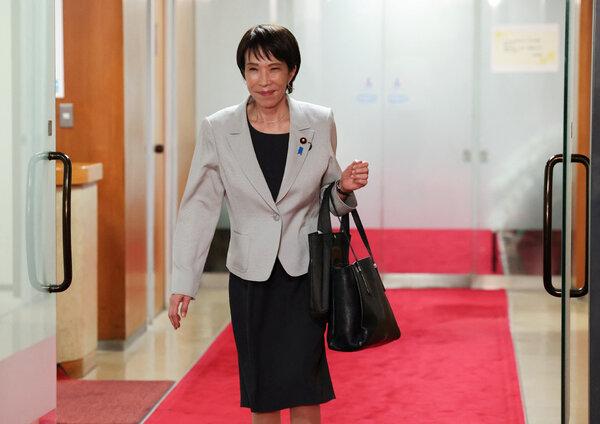
Introduction
Sanae Takaichi, the current Minister for Internal Affairs and Communications, holds significance in Japanese politics as one of the prominent female politicians in the country. With increasing representation of women in government and Takaichi’s push for social and economic reforms, her role is becoming even more relevant in the context of Japan’s evolving political landscape.
Background and Political Journey
Born on July 4, 1961, in the city of Sapporo, Hokkaido, Sanae Takaichi graduated from the prestigious Takushoku University with a degree in English. Before entering politics, she worked as an aide to members of the Diet (Japan’s Parliament) and later became the first female member of the Liberal Democratic Party’s (LDP) Youth Bureau. Takaichi entered the Japanese House of Representatives in 2005, and since then, she has held various key positions, including Minister of State for Japan’s Economic and Fiscal Policy and Minister of State for Gender Equality.
Recent Developments
In recent weeks, Takaichi has been in the spotlight for her stance on several critical issues. Notably, she has advocated for the empowerment of women in the workforce, calling for policies that bolster childcare support and address wage disparities. She also took a firm position on national security, emphasizing the need for Japan to expand its defence capabilities amid regional tensions.
Moreover, her recent initiatives have sparked discussions on critical infrastructure, digital innovation, and disaster preparedness, especially in light of Japan’s vulnerability to natural disasters. Takaichi’s proactive approach aims to modernize Japan’s infrastructure and ensure its resilience for the future.
Conclusion
As the political landscape in Japan continues to change, figures like Sanae Takaichi are proving essential in leading discussions on reform and innovation. Her commitment to gender equality and economic reform resonates with many citizens who seek a more progressive government. Looking ahead, Takaichi is poised to play a pivotal role in shaping Japan’s policies, making her an essential figure to watch as the nation navigates its future challenges. In a historical context where female leaders are often undervalued, Takaichi’s ascent promises to inspire more women to participate actively in politics, ultimately changing the dynamics of Japanese governance.