Introduction
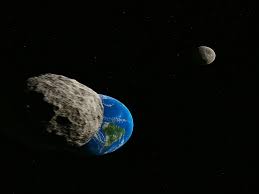
The recent announcement from NASA regarding a newly discovered asteroid has sparked interest in the astronomical community and among the general public. This asteroid, which has been identified as 2020 CD3, is being considered a potential second moon for Earth. The discovery has not only significant implications for our understanding of our own planet’s orbital dynamics but also sheds light on the complexities of minor celestial bodies in our solar system.
NASA’s Discovery
In February 2020, NASA and various astronomers observed asteroid 2020 CD3, a small object measuring approximately 1.9 to 3.5 metres in diameter. This asteroid is classified as a temporary satellite of Earth, meaning it could potentially orbit our planet for a limited time before breaking free or crashing into the atmosphere. What makes this discovery remarkable is that it demonstrates a dynamic interaction between Earth and other celestial bodies, highlighting the dynamic nature of our solar system.
Current Understanding of Earth’s Moons
Traditionally, Earth is known to have one permanent natural satellite—our Moon. However, 2020 CD3 is one of the many temporally captured asteroids that orbit Earth for a short duration. On occasion, these asteroids can be temporarily captured due to gravitational effects, which can lead to what appears to be a second moon, albeit a temporary one. This event helps scientists extend their understanding of how moons and asteroids interact in their orbits.
Significance of the Discovery
The discovery of 2020 CD3 raises important questions regarding the history of our solar system and the processes governing the capture of asteroids. It encourages further research into the characteristics of these small celestial bodies and their potential for life support, resource harvesting, and even human exploration in the future. Most notably, this discovery could lead to a better understanding of the plethora of objects that traverse our solar system, potentially transforming our knowledge of space mechanics.
Conclusion
As we continue to explore the cosmos, the identification of asteroids like 2020 CD3 challenges our understanding of missed opportunities and the dynamic nature of planetary systems. While the asteroid’s status as a second moon is temporary, the implications of this discovery are profound. It invites scientists to deepen their research into the interactions of celestial bodies and encourages public interest in space exploration. With evolving technology and ongoing missions, we may uncover even more extraordinary celestial phenomena on the horizon.