Introduction
The recent news regarding Chinese astronauts stranded aboard the Tiangong space station has drawn attention to the complexities of space missions and international cooperation in space exploration. This incident not only raises questions about the safety of astronauts but also highlights the advancements and challenges facing China’s space program, especially as the country aims to establish a permanent presence in low Earth orbit.
The Incident
On July 21, 2023, the Chinese space agency confirmed that the crew of Shenzhou-15 had experienced an unexpected technical malfunction. The astronauts, who had been conducting research missions aboard the Tiangong space station for the past six months, found themselves unable to safely return to Earth due to an anomaly in their spacecraft systems. The malfunction primarily originated from a fault in the guidance system, rendering the spacecraft temporarily inoperable.
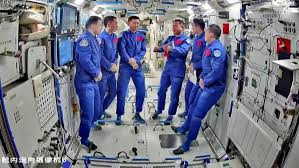
The three astronauts, Chen Dong, Liu Yang, and Zhang Guanghui, are in good health and are following procedures to manage the situation while ensuring their safety. Communication with mission control has been consistent, and experts are working around the clock to devise solutions that could help the crew return home safely.
Current Developments
The Chinese National Space Administration (CNSA) has announced a series of emergency measures aimed at examining the spacecraft’s problems and extending the astronauts’ stay while scientific assessments are conducted. Meanwhile, international space agencies, including NASA and ESA, have offered technical assistance to help resolve the ongoing crisis, demonstrating a spirit of global cooperation in the field of space exploration.
Additionally, China has been actively monitoring and launching contingency plans for potential rescue missions with alternative spacecraft that could arrive at Tiangong in the event that the current situation is prolonged.
Conclusions and Implications
The situation of Chinese astronauts stranded in space underscores the inherent risks of human spaceflight and the need for robust safety protocols in outer space. While plans are being implemented to resolve the current issues, this incident serves as an important reminder of the challenges faced by all space-faring nations.
As recovery efforts continue, this timely event may accelerate discussions on international cooperation in space missions, safety standards, and emergency protocols. The world will be closely watching the developments over the next weeks, hoping for a safe return of the talented astronauts and a resolution that reflects the resilience and innovation that defines space exploration.