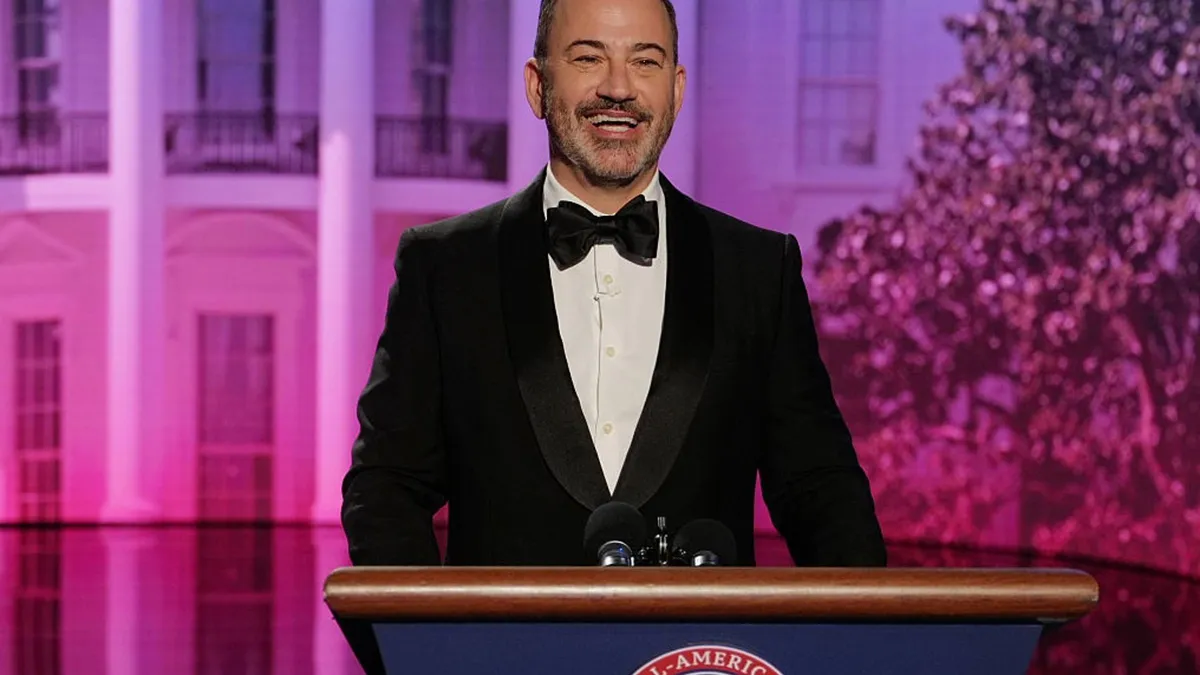
The controversy escalated when Jimmy Kimmel made a joke about Melania Trump having a ‘glow like an expectant widow’ during a mock roast ahead of the White House Correspondents’ Dinner. Just days later, this light-hearted jab took on a darker tone following a shooting incident linked to the event.
Melania Trump reacted swiftly, demanding ABC fire Kimmel, calling his words “hateful and violent rhetoric.” President Donald Trump echoed her sentiment, labeling the joke a “despicable call to violence.” This marked a significant shift in their usual engagement with late-night comedy, where they often turned a blind eye to jokes aimed at them.
The timing of Kimmel’s joke raised eyebrows. It came just before a gunman was arrested for attempting to assassinate President Trump at the White House Correspondents’ Dinner. In light of this, many questioned whether the political rhetoric surrounding such jokes had crossed a line.
Kimmel defended himself, asserting that his intention was simply to poke fun at the age difference between him and Melania—79 and 56 years old, respectively. “It was not by any stretch of the definition a call to assassination,” he stated. He further emphasized his long-standing advocacy against gun violence, making it clear that he never intended for his humor to incite fear or aggression.
Despite Kimmel’s defense, the backlash grew. His joke not only drew ire from the Trumps but also sparked calls for disciplinary action from ABC, igniting debates on free speech versus accountability in comedy.
Reactions:
- Melania Trump: “Kimmel’s hateful and violent rhetoric is intended to divide our country.”
- Donald Trump: “This is something far beyond the pale.”
- Jimmy Kimmel: “I’ve been very vocal for many years speaking out against gun violence in particular.”
- Melania Trump again emphasized: “Enough is enough. It is time for ABC to take a stand.”
This incident highlights the delicate balance comedians must navigate in today’s politically charged climate. As gun violence continues to plague communities across America, late-night hosts find themselves under scrutiny for their jokes—especially when they touch on sensitive subjects like politics and violence.
As this story unfolds, it serves as a reminder of how humor can be perceived differently depending on context and timing. With calls for Kimmel’s firing echoing through social media and news outlets alike, the future of political satire may hang in the balance.