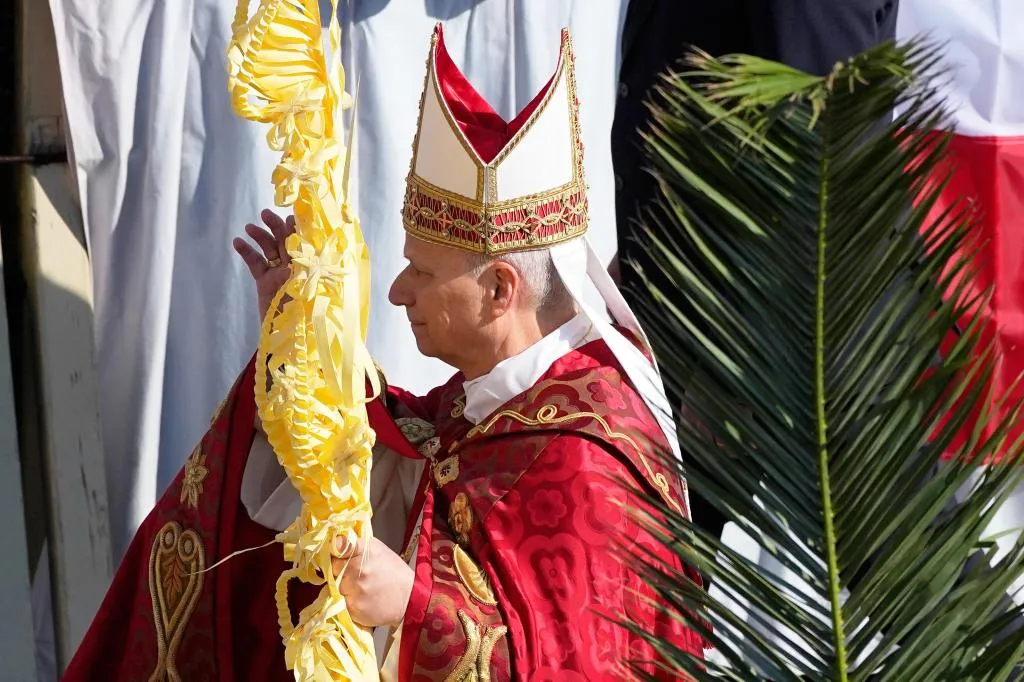
Palm Sunday 2026 was marked by a poignant service led by Pope Leon XIV in St. Peter’s Square, where he rejected the notion that God justifies war. This message resonated deeply as the world grapples with significant conflicts, including the ongoing war between the United States and Israel against Iran, now in its second month, and the continued invasion of Ukraine by Russia.
Before a congregation of tens of thousands, Pope Leon XIV specifically prayed for Christians in the Middle East, highlighting their struggles amid escalating violence. His declaration that “God is the ‘King of Peace’ who rejects violence” served as a powerful reminder of the Church’s commitment to peace.
In a historic turn of events, the police in Jerusalem prevented Catholic leaders from entering the Church of the Holy Sepulcher, a first in centuries, disrupting the traditional observance of Palm Sunday at the site of Jesus’ crucifixion. This restriction raised concerns about religious freedom and the ongoing tensions in the region.
During the service, Pope Leon XIV expressed gratitude for being back in St. Peter’s Square, a sentiment echoed by many who have followed the Church’s journey through recent challenges, including the hospitalization of Pope Francis for bilateral pneumonia just weeks before last year’s Holy Week.
As the Pope prepares to preside over the Good Friday procession at the Colosseum and celebrate Easter Mass in St. Peter’s Square, the Church remains vigilant in its mission to promote peace and reconciliation. Leon XIV’s commitment to restoring the tradition of the foot washing ceremony at the Basilica of St. John Lateran further emphasizes this focus.
In his address, the Pope urged the faithful to elevate their prayers to the “Prince of Peace” for those suffering from the ravages of war, calling for concrete paths toward reconciliation. His words serve as a beacon of hope in these tumultuous times.
As the world watches, the implications of these events unfold against a backdrop of ongoing conflicts and the Church’s efforts to advocate for peace. Details remain unconfirmed regarding the future of religious observances in Jerusalem and the broader implications for the Church’s role in international peace efforts.