Introduction to the Nikkei 225
The Nikkei 225 is Japan’s leading stock market index and one of the most watched in the world. It includes 225 of the largest publicly traded companies listed on the Tokyo Stock Exchange. As an indicator of Japan’s economic health, the performance of the Nikkei 225 resonates significantly not just within Japan, but also across global markets.
Recent Trends and Developments
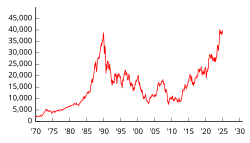
As of October 2023, the Nikkei 225 has demonstrated considerable resilience amid fluctuating economic conditions. Recently, the index takes a notable upward trajectory, reaching a 33-year high, driven primarily by a surge in technology and manufacturing sectors. According to the Tokyo Stock Exchange, the Nikkei 225 has gained approximately 20% in value since the beginning of the year, reflecting investors’ renewed confidence in Japan’s post-pandemic recovery.
Market analysts attribute this growth to several factors, including the Bank of Japan’s (BoJ) commitment to maintaining its accommodative monetary policy. The BoJ’s measures have included maintaining low-interest rates and asset purchases, facilitating a conducive environment for stock market growth. Additionally, Japan’s improved corporate earnings and favourable exchange rates have buoyed investor sentiment.
Global Significance
The Nikkei 225’s movements serve as a barometer for global market trends, often impacting investor behaviour in foreign markets. As Japan is the third-largest economy in the world, developments within the Nikkei 225 can influence international stock indices, including the S&P 500 and FTSE 100. Recent trends indicate that global investors are keenly observing the Nikkei as Japan continues to reopen and strengthen its economic fundamentals.
Challenges Ahead
Despite its recent successes, the Nikkei 225 faces challenges that could impact its future performance. Geopolitical tensions in the Asia-Pacific region, supply chain disruptions, and inflationary pressures could pose headwinds. Furthermore, the potential tightening of monetary policy by the BoJ to curb inflation may lead to market volatility.
Conclusion
In conclusion, the Nikkei 225 remains a crucial indicator of Japan’s economic standing and a significant player in the global financial landscape. As it continues its upward trend, market analysts will be keenly watching its resilience against economic pressures. Investors should maintain a close eye on the Nikkei 225 as it could provide insights into broader market movements and ongoing economic recovery strategies in a post-pandemic world.