Introduction
The Real Living Wage (RLW) is a vital concept that addresses the inadequacy of minimum wage regulations in the UK. Aimed at ensuring that workers can afford a decent standard of living, the RLW is independently calculated based on the cost of living. As the UK faces ongoing economic challenges post-pandemic and amid a cost-of-living crisis, understanding the significance of real living wage rates has never been more pertinent.
Current Real Living Wage Rates
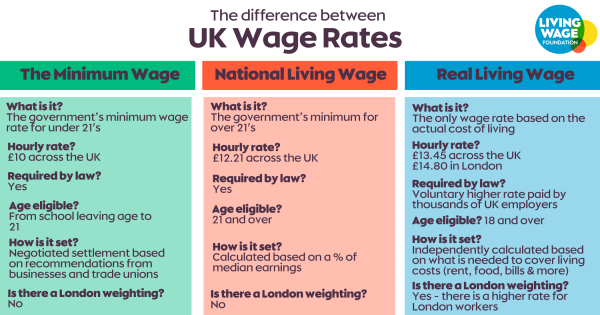
As of September 2023, the RLW has been set at £12.00 per hour across the UK, while London has a higher benchmark at £13.50 per hour, reflecting the elevated living costs in the capital. These rates are reassessed annually by the Living Wage Foundation, taking into account essential costs such as housing, food, childcare, and other basic needs. This year’s increase from the previous rates signifies a growing recognition of the need for fair compensation in light of rising inflation and living costs.
The Impact of Real Living Wage Rates
Implementing the RLW has substantial implications for both employees and employers. For workers, receiving a real living wage allows for greater financial stability, which can enhance their quality of life and wellbeing. Research indicates that businesses that pay the living wage often report improved staff morale, lower turnover rates, and increased productivity, creating a positive cycle that benefits both employees and companies. Conversely, critics argue that raising wages could lead to increased costs for businesses, potentially impacting pricing and employment levels if not managed correctly.
Conclusion
The real living wage rates encapsulate a fundamental aspect of the UK economy, reflecting the ongoing struggle for fair pay in a rapidly changing landscape. With inflation continuing to weigh heavily on household finances, advocates argue that more employers should commit to paying the RLW to ensure their employees can meet the cost of living. Looking forward, there is potential for greater awareness and support for the RLW, particularly as discussions around fair wage practices become more crucial. For readers, understanding the significance of these rates not only sheds light on the current labour market but also encourages informed discussions about employment rights and economic justice in their communities.