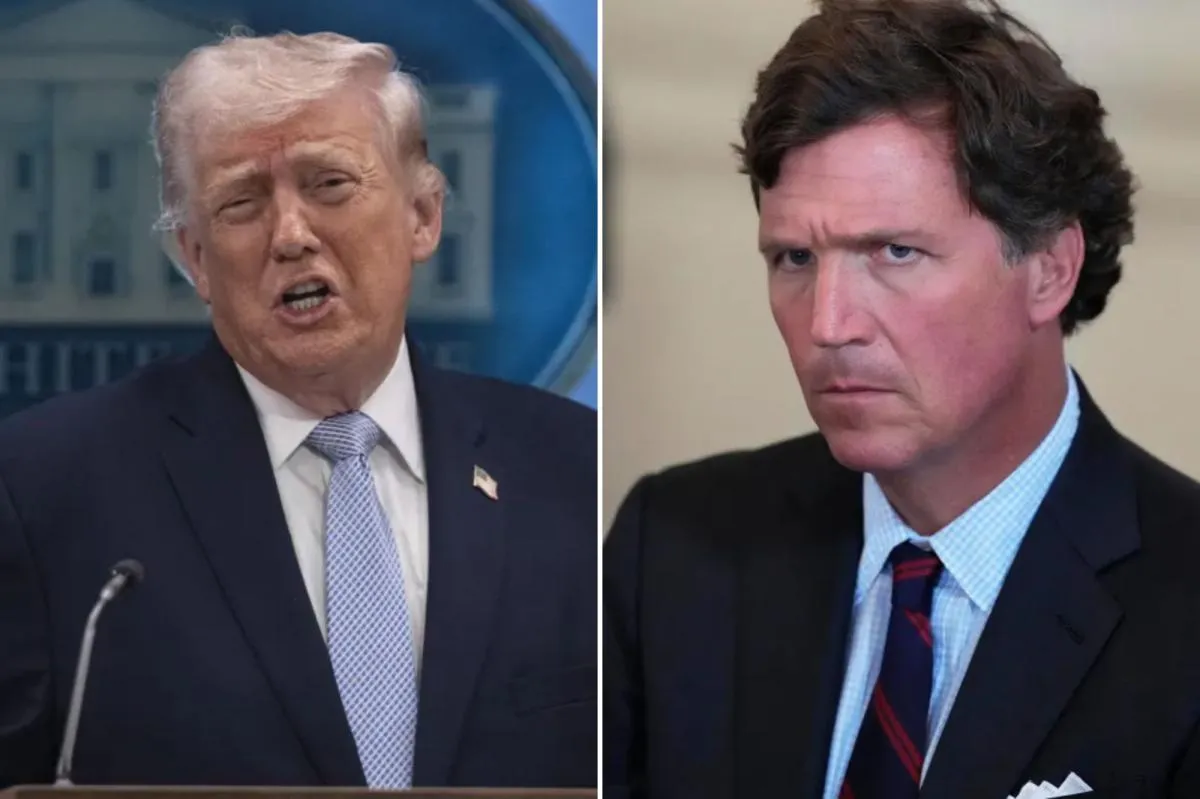
Who is involved
In the world of American politics and media, few relationships have been as closely scrutinized as that between Tucker Carlson and Donald Trump. Historically, Carlson, a prominent media figure, has been a staunch supporter of Trump, often defending his policies and actions. This support was evident even during tumultuous times, such as when Carlson suggested that divine intervention played a role in Trump surviving an assassination attempt. However, recent developments have dramatically altered this narrative.
On April 7, 2026, a decisive moment occurred when Trump, in a phone call with The Post, referred to Carlson as a “low-IQ person,” indicating a significant rift between the two. This public denouncement came shortly after Carlson had voiced his opposition to Trump’s aggressive military stance towards Iran, urging U.S. officials to reject the president’s plans for military action. Carlson’s shift from supporter to critic has sent ripples through the political landscape, raising questions about the future of their relationship.
The immediate effects of this shift have been profound. Carlson condemned Trump’s threats against Iran’s civilian infrastructure, labeling them a “war crime” and criticizing an Easter morning post by Trump as “vile on every level.” In stark contrast, Trump warned Iran of severe consequences if they did not comply with his demands, stating, “A whole civilization will die tonight, never to be brought back again.” This stark dichotomy in their rhetoric highlights the growing divide between the two figures.
As the situation unfolds, experts have begun to weigh in on the implications of this rift. Carlson’s suggestion that Trump might be the antichrist during his podcast reflects a deepening concern over Trump’s approach to foreign policy. Carlson stated that officials should tell Trump to “figure out the codes on the football yourself,” a clear indication of his belief that Trump’s decision-making could lead to disastrous consequences. This perspective is echoed by political analysts who warn that such aggressive posturing could escalate tensions with Iran and destabilize the region.
The contrast between Carlson’s previous support and his current criticism raises important questions about loyalty and accountability in political discourse. As a media figure, Carlson has a platform that can influence public opinion, and his shift may resonate with audiences who are increasingly wary of aggressive military interventions. The implications of this change extend beyond their personal relationship, potentially affecting Trump’s standing among his supporters and the broader political landscape.
In the wake of these developments, the community is left to ponder the future of U.S. foreign policy and the role of influential media figures like Carlson. The dialogue surrounding military action against Iran is now more contentious than ever, with voices like Carlson’s advocating for restraint and caution. As the situation continues to evolve, it remains to be seen how this rift will impact both Carlson’s career and Trump’s presidency.
Details remain unconfirmed regarding the long-term effects of this public fallout. However, the stark contrast between Carlson’s previous support and his current criticisms underscores a significant shift in the political narrative, one that may have lasting implications for both figures involved.