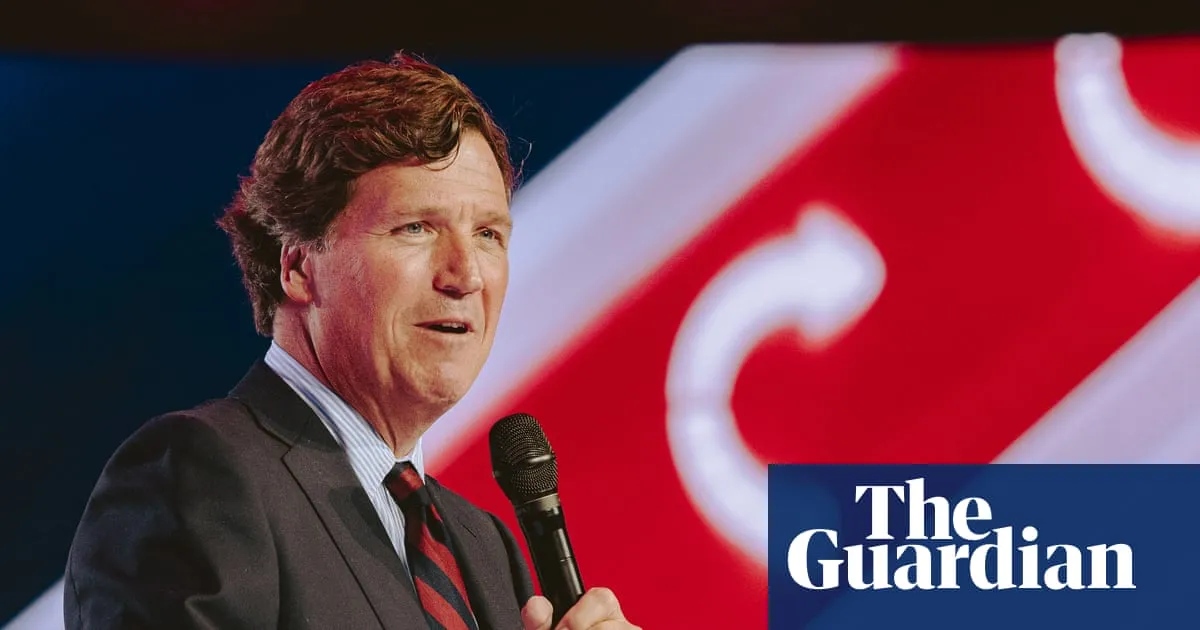
Tucker Carlson has recently expressed fears of facing criminal charges related to his communications with individuals in Iran. The former Fox News host claimed that the CIA is preparing a crime report against him, alleging that he committed a crime by engaging with Iranian officials. This revelation comes amid heightened scrutiny of his political views and affiliations, particularly regarding U.S. foreign policy in the Middle East.
In his statements, Carlson indicated that the Department of Justice is compiling a file against him under the Foreign Agents Registration Act. He has been vocal in his criticism of U.S. support for Israel and the ongoing conflict with Iran, stating, “This is Israel’s war. This is not the United States’s war.” His comments suggest a significant departure from the traditional stances held by many within the MAGA movement.
As Carlson navigates this complex political landscape, he has also claimed that U.S. intelligence agencies have been monitoring his communications. He has denied any wrongdoing, asserting, “I have only one loyalty, and that’s to the United States.” These statements reflect a growing tension between Carlson and some of his former allies, including Donald Trump, who recently remarked that Carlson has “lost his way” and is no longer aligned with the MAGA movement.
Key moments
Despite the serious nature of Carlson’s claims, reports suggest that there is currently no active CIA investigation into his activities. Marc Caputo noted that Carlson’s assertions may not be substantiated by evidence, raising questions about the motivations behind his statements. Carlson has also begun outreach efforts with Muslim and Christian communities in Arab states, further complicating his standing within the conservative base.
Adding to the controversy, Carlson was reportedly detained at Ben Gurion Airport due to his pro-Palestine views during a recent tour of the Middle East, which included visits to holy sites in Jordan and Palestine. His tour and subsequent remarks have drawn both support and criticism, highlighting the polarized nature of U.S. foreign policy discussions.
As the situation develops, reactions from various political figures continue to emerge. Carlson’s shift in rhetoric and his engagement with communities traditionally viewed as adversarial to U.S. interests have sparked debate about the future of his political career and the implications for the broader conservative movement.
Details remain unconfirmed regarding the extent of any investigations or the potential legal ramifications Carlson may face. However, his situation underscores a significant moment in the intersection of media, politics, and international relations, particularly as the U.S. grapples with its role in the Middle East.