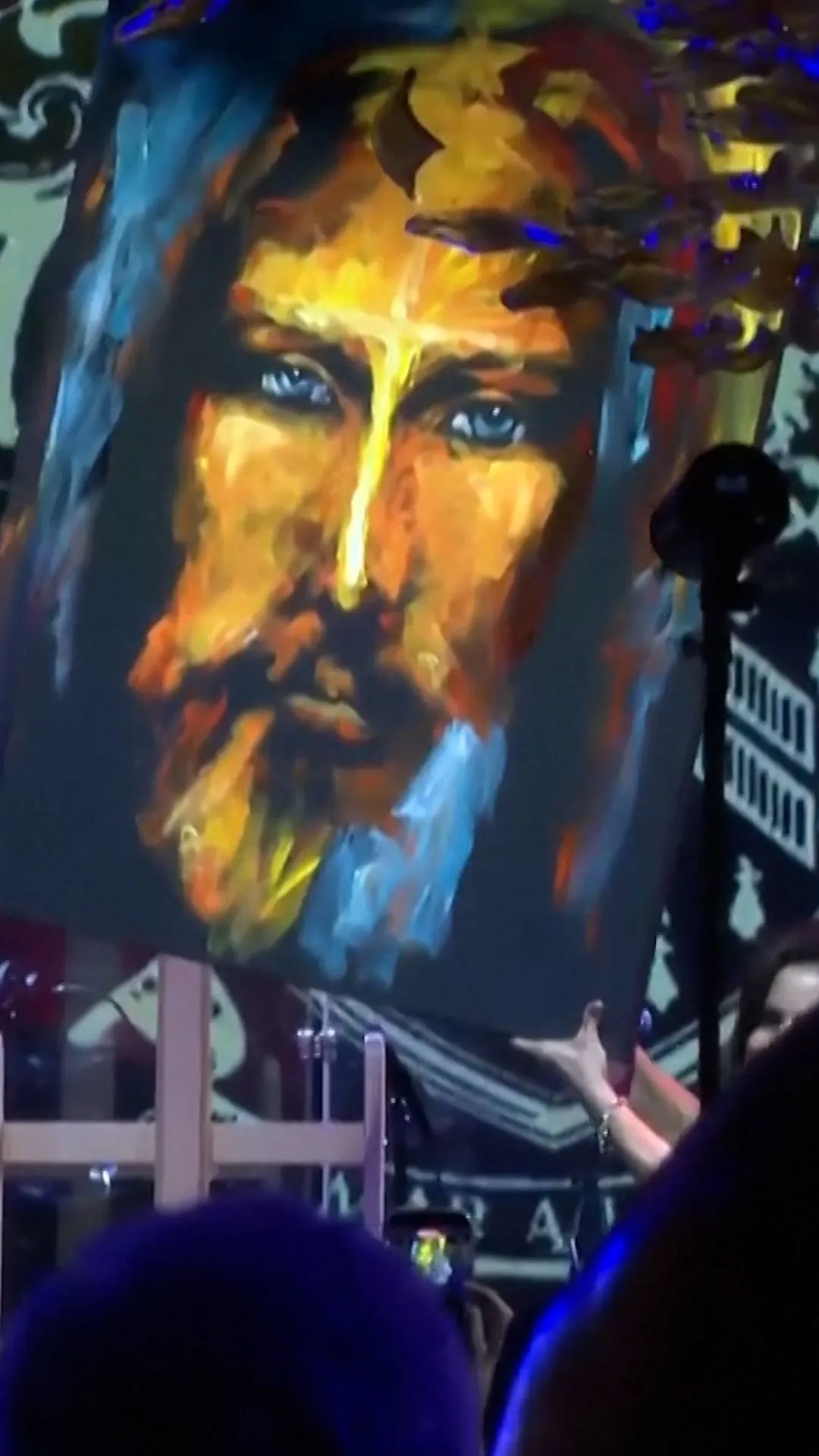
In a surprising turn of events on April 13, 2026, former President Donald Trump shared an AI-generated image of himself as a Christ-like figure on his Truth Social platform. The post, which quickly garnered attention, was deleted approximately 13 hours later, but not before it sparked significant backlash from various quarters, including church leaders and political figures.
Trump’s image was accompanied by a claim that it depicted him as a doctor, linking it to the humanitarian efforts of the Red Cross. However, this assertion did little to quell the outrage that ensued. Many viewed the portrayal as an inappropriate and blasphemous representation of faith, igniting a firestorm of criticism from conservatives, Democrats, and religious leaders alike.
In the wake of the post, Trump directed his ire towards Pope Leo XIV, labeling him as ‘weak on crime’ and ‘terrible for foreign policy.’ This criticism did not go unnoticed, with Archbishop Paul S Coakley responding that the Pope’s role is not that of a politician, but rather one focused on the care of souls. The tensions between the White House and the Vatican have been building for months, and this incident has only intensified the discord.
Italian Prime Minister Giorgia Meloni also condemned Trump’s remarks about the Pope, calling them ‘unacceptable.’ The backlash extended beyond political leaders, as conservative activist Riley Gaines criticized the image for lacking humility, questioning whether Trump genuinely believed he was being humorous or if there was another explanation for his actions.
Further adding to the chorus of disapproval, Megan Basham described the post as ‘OUTRAGEOUS blasphemy,’ urging Trump to apologize for his actions. Bishop Robert Barron echoed this sentiment, calling for an apology from Trump regarding his statements about the Pope. The incident has reignited discussions about the intersection of faith and politics, particularly in light of Trump’s strong support among Christian voters during the 2024 election, where 56% of Catholics backed him.
Historically, this is not the first time Trump has shared controversial religious imagery. Following the death of Pope Francis, he previously posted an image portraying himself as the Pope, which also drew criticism. The recurring theme of Trump intertwining his political persona with religious symbolism raises questions about the appropriateness of such representations in the public sphere.
As reactions continue to pour in, the community remains divided. While some supporters may view the image as a bold statement, many others see it as a gross misrepresentation of faith. The dialogue surrounding this incident reflects broader societal tensions regarding the role of religion in politics and the responsibilities of public figures in representing faith.
Details remain unconfirmed regarding the full impact of this incident on Trump’s political standing, but it is clear that the Trump Jesus image has ignited a passionate debate that resonates across various segments of society.