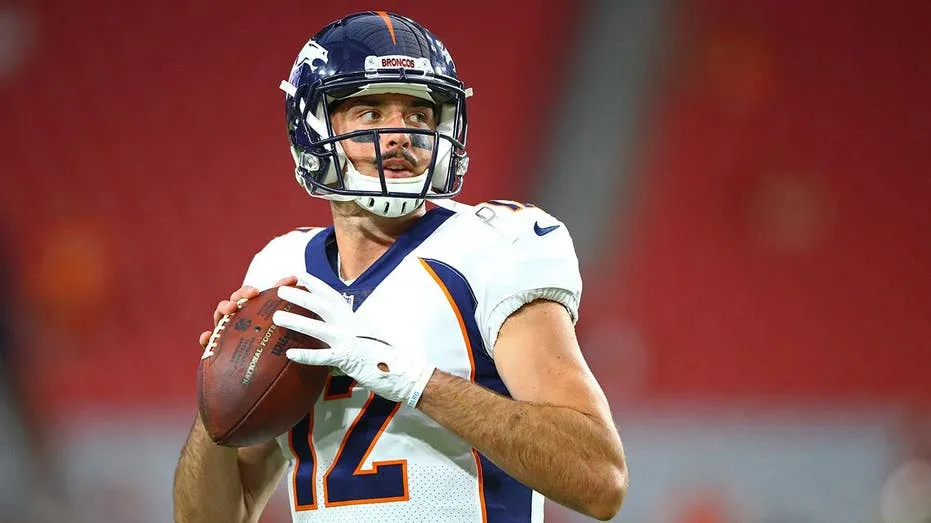
In the world of professional sports, comebacks often inspire hope and excitement. For Paxton Lynch, a former first-round pick of the Denver Broncos, the anticipation surrounding his return to football was palpable. After a challenging NFL career that saw him play just five games before his departure in 2019, Lynch sought to reignite his passion for the game by joining the Colorado Spartans in the National Arena League. Fans and teammates alike were eager to see if Lynch could reclaim his former glory.
However, on March 28, 2026, in Salina, Kansas, the narrative took a heartbreaking turn. Lynch suffered a season-ending torn LCL injury during a game, abruptly halting his comeback attempt. Before this injury, Lynch had shown promise, throwing three touchdown passes in just three games with the Spartans. His performance was a glimmer of hope for both him and the team, as he played with a determination to prove himself once again.
The injury not only dashed Lynch’s aspirations but also left the Colorado Spartans in a difficult position. Having played only two and a half games in arena football, Lynch’s absence will be felt deeply. The Spartans were counting on his experience and skill to lead the team, and now they must regroup and find a way to fill the void left by their star player. Lynch’s injury is a stark reminder of the unpredictability of sports and the physical toll it can take on athletes.
In his own words, Lynch expressed his frustration, stating, “I was pissed off. And it sucks. I didn’t want it to be like this.” These sentiments resonate with many athletes who face similar setbacks in their careers. Lynch had approached this opportunity with a renewed sense of confidence, saying, “I was like, ‘OK, if I play this year in arena football, I’m going to play as Paxton Lynch. I’m going to have full confidence in myself. I don’t really care.’ And that’s what I did.” His determination was evident, making the injury all the more disheartening.
As Lynch reflects on this setback, it is essential to consider the broader implications of his injury. Experts in sports medicine often highlight the challenges athletes face when returning from injuries, particularly in high-impact sports like football. The mental and physical hurdles can be daunting, and for Lynch, this injury may require a significant recovery period. His journey back to the field will not only depend on physical rehabilitation but also on his mental resilience.
While Lynch’s injury marks a significant moment in his career, it also serves as a reminder of the community that surrounds athletes. Fans, teammates, and coaches have rallied around Lynch, offering support during this challenging time. The bond formed through shared experiences in sports can be a powerful motivator for recovery. Lynch’s story is not just about his individual journey; it reflects the collective spirit of those who believe in him.
As the Colorado Spartans look to the future, they will undoubtedly miss Lynch’s contributions on the field. However, the team and its supporters remain hopeful that he will recover and find a way back to the game he loves. For Lynch, this injury may be a setback, but it does not define his career. His determination to overcome adversity will be key as he navigates this challenging chapter.
Details remain unconfirmed regarding the extent of Lynch’s recovery timeline, but one thing is clear: the journey ahead will require patience and perseverance. As the community rallies around him, Lynch’s story continues to unfold, reminding us all of the resilience of the human spirit in the face of adversity.