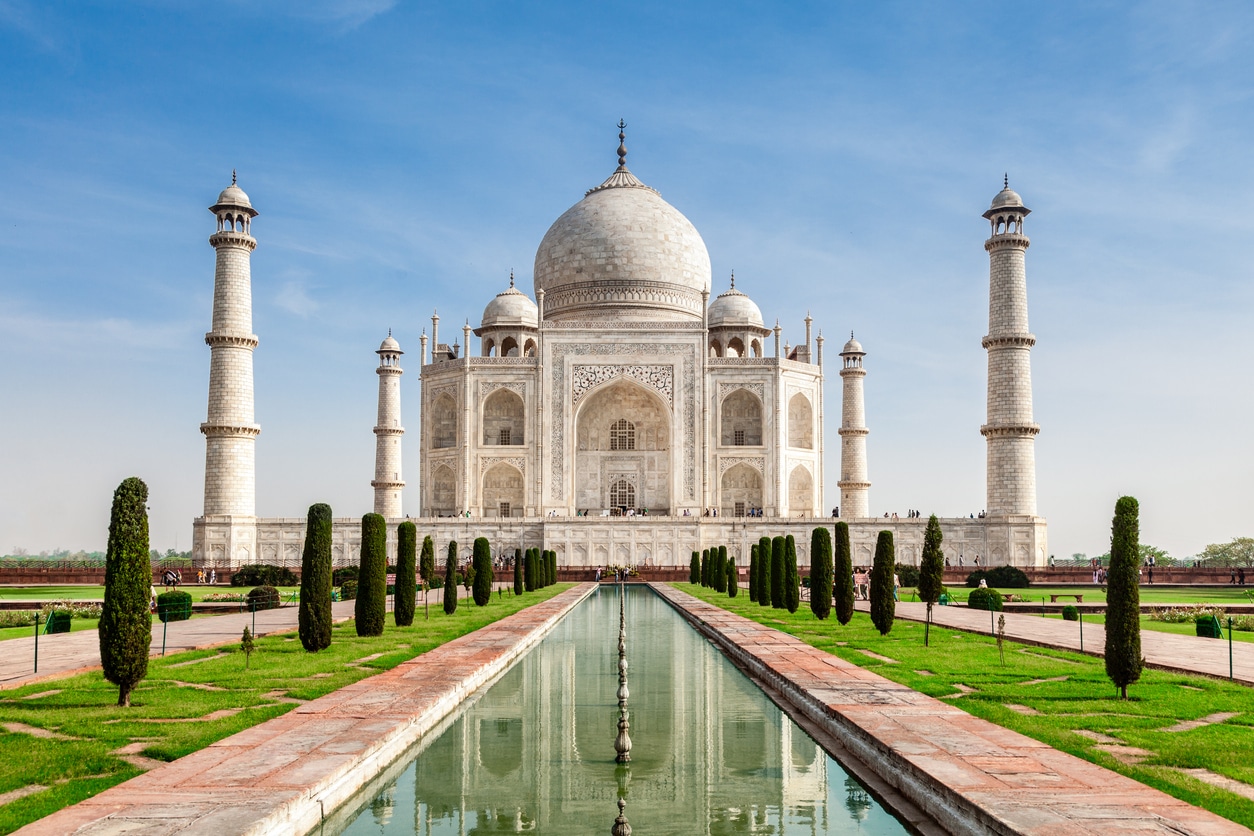
The Importance of the Taj Mahal
The Taj Mahal, one of the most iconic monuments in the world, stands as a testament to love and exquisite design. Located in Agra, India, this UNESCO World Heritage Site attracts millions of tourists each year, serving as a major cultural and historical landmark. Its significance is rooted not only in its beauty but also in the story behind its construction, which reflects the rich heritage of Mughal architecture.
A Brief History
Commissioned in 1632 by the Mughal Emperor Shah Jahan in memory of his beloved wife Mumtaz Mahal, the Taj Mahal was completed in 1648, although some parts of the complex were finished in subsequent years. Built primarily of white marble, the monument is renowned for its intricate architectural elements that combine Persian, Islamic, and Indian styles. The sprawling gardens accompanying the mausoleum further enhance its grandeur, symbolising paradise on earth.
Architectural Marvel
Spanning over 17 hectares, the Taj Mahal is not only a mausoleum but also an immense complex that includes a mosque, a guest house, and beautifully landscaped gardens. Its impressive dome rises to 35 metres, surrounded by four slender minarets, which are slightly tilted outward for structural integrity. The reflection of the Taj Mahal in the water of the reflecting pool adds to its enchanting beauty; a design that was intentionally conceived to create an ethereal effect.
Current Events and Preservation Efforts
In recent news, the Taj Mahal has been a focal point in discussions regarding preservation efforts due to concerns over pollution and its impact on the marble and environment. The Archaeological Survey of India has initiated various restoration projects to maintain the monument’s delicate features and structural integrity. As of late 2023, ongoing concerns about air quality and the potential fading of its pristine marble have prompted the local government to enforce stricter industrial regulations in Agra.
Significance for Tourists and Locals
For visitors, the Taj Mahal is more than just a sightseeing destination; it embodies the history and romance of India’s past. Every year, millions flock to this UNESCO World Heritage Site, bringing vitality to the local economy while also supporting ongoing conservation efforts. Meanwhile, it remains a source of pride for Indians and a symbol of their rich cultural heritage.
Conclusion
The Taj Mahal continues to captivate hearts and minds across the globe, signifying the enduring power of love and the richness of architectural beauty. As preservation efforts intensify, it is imperative for both locals and international communities to recognize the value of this monument, ensuring its legacy endures for generations to come. The future of the Taj Mahal rests not only on its structural integrity but also on our collective effort to cherish and protect this timeless emblem.