Introduction
The Parthenon, an iconic temple situated on the Acropolis of Athens, is widely regarded as one of the most important symbols of Ancient Greece and Western civilization. Constructed between 447 and 432 BC, it stands as a testament to the artistic and architectural achievements of the ancient Greeks. As a UNESCO World Heritage Site, its significance extends beyond its aesthetic appeal; it represents the political and cultural prowess of Athens during its Golden Age.
Architectural Significance
The Parthenon was designed by the architects Ictinus and Callicrates, and it showcases the Doric order of architecture, which is characterized by its sturdy columns and minimalistic design. The temple was dedicated to the goddess Athena, the patron deity of the city, and it housed a monumental statue of her crafted by the renowned sculptor Phidias. The structure’s harmonious proportions and intricate sculptures, including the famous friezes and metopes, make it a masterpiece of classical architecture.
Historical Context
The construction of the Parthenon coincided with a period of significant political power for Athens following the Persian Wars. It was financed by the Delian League, reflecting Athens’ dominance in the region. The Parthenon not only served a religious function but also reinforced the political ideals of democracy and the strength of the Athenian state.
Preservation Efforts
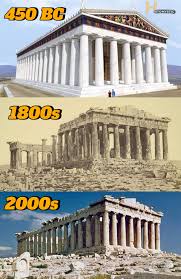
Throughout the centuries, the Parthenon has suffered various forms of destruction and degradation, from the Byzantine era, when it was converted into a church, to the Ottoman period, when it was turned into a mosque. In the 17th century, a catastrophic explosion caused significant damage to the structure. Preservation efforts began in earnest in the 20th century, with ongoing restoration projects aimed at stabilising and conserving the temple for future generations.
Conclusion
The Parthenon remains a powerful symbol of Ancient Greece, reflecting its historical ideals, artistic achievements, and enduring legacy. As a focal point for both scholars and tourists, it continues to inspire and educate people about the advancements of ancient societies. The ongoing restoration efforts highlight the importance of preserving such cultural icons, ensuring that they remain an integral part of global heritage. As we move forward, the Parthenon will undoubtedly continue to captivate and connect new generations with the profound history it represents.