Introduction
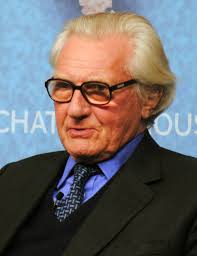
Michael Heseltine, a stalwart of British politics and former Deputy Prime Minister, remains an important figure in discussions surrounding the Conservative Party and its evolution. His career, spanning over five decades, is marked by significant contributions to the political landscape of the United Kingdom. As the UK navigates its post-Brexit identity and grapples with pressing social and economic issues, understanding Heseltine’s views and legacy has never been more relevant.
Key Contributions and Political Career
Born on March 21, 1933, in Swansea, Wales, Heseltine entered politics in the early 1960s, becoming the Member of Parliament (MP) for Tavistock in 1966. He held various positions in the Conservative government, notably as Secretary of State for Defence, and served as Deputy Prime Minister under John Major from 1995 to 1997. He was instrumental in the privatisation of several key industries, promoting free market policies that have been a cornerstone of Conservative ideology.
One of Heseltine’s most notable achievements was his role in the regeneration of urban areas, particularly in his oversight of the Docklands redevelopment in London during the 1980s. This initiative not only transformed the landscape of the capital but also served as a model for similar projects worldwide. Heseltine’s passion for architecture and urban design has deeply influenced contemporary discussions about public spaces and infrastructure.
Current Relevance
In recent months, Heseltine has emerged again as a voice of experience as the Conservative Party works to define its strategy in light of recent electoral challenges. He has voiced concerns regarding the party’s direction, particularly in relation to its traditional values and its approach to issues such as climate change and social inequality. His advocacy for a more inclusive and socially aware Conservative Party has sparked debates within the party, highlighting the tensions between traditionalists and modernisers.
Conclusion
Michael Heseltine’s legacy is a testament to the changing face of British politics. As an advocate for economic and urban renewal, his influence continues to resonate today. In a period marked by uncertainty, Heseltine’s insights offer valuable perspectives that could guide current and future leaders. The potential for transformation within the Conservative Party, steering towards a more progressive agenda, may depend on the willingness of its members to heed the lessons learned from Heseltine’s extensive career. For readers, understanding Heseltine’s impact is crucial for appreciating the complexities of modern British governance.