Introduction
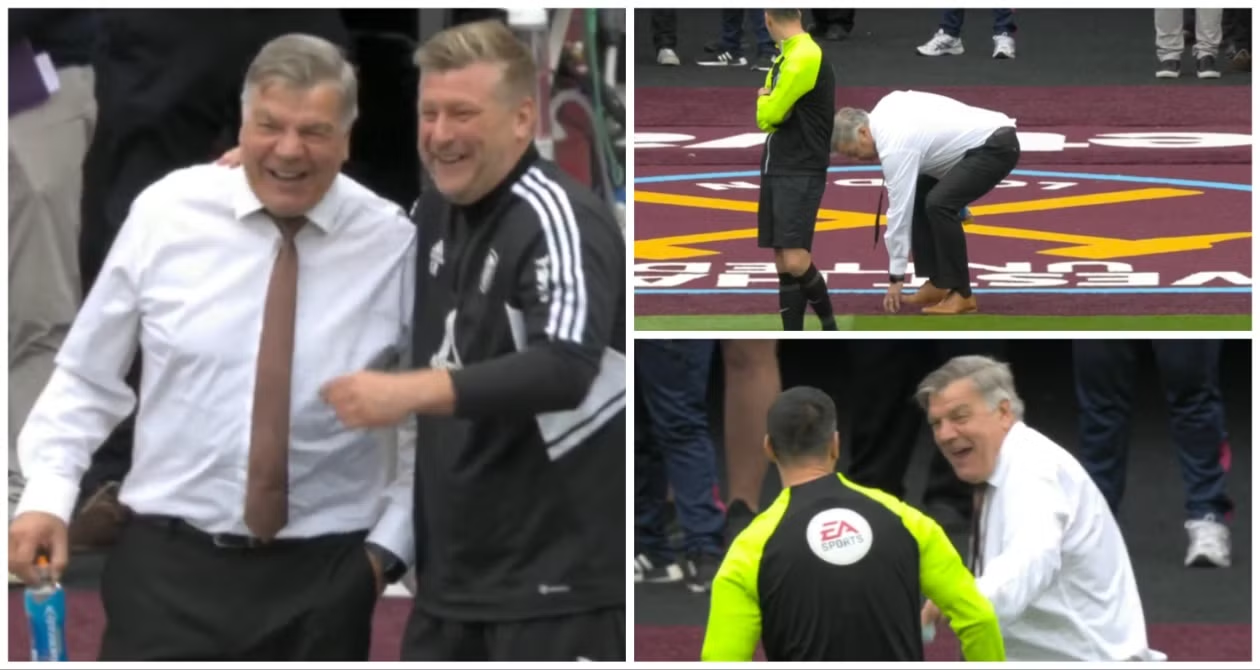
Sam Allardyce, a prominent figure in English football, has made headlines once again with his return to management. Known for his tactical acumen and ability to rescue teams from relegation, Allardyce’s journey through the world of football has been both tumultuous and remarkable. His recent comeback has sparked discussions about his influence and effectiveness in an ever-evolving sport.
Recent Events
In September 2023, Allardyce was appointed as the head coach of Leeds United after a disappointing start to the season that saw the team languishing in the lower half of the Premier League table. His appointment followed a series of unsuccessful managerial changes in the club, and he was tasked with saving Leeds from the threat of relegation. Allardyce’s reputation as a ‘firefighter’ manager is well-deserved, having previously led teams like Crystal Palace and Sunderland to safety in dire situations.
Since taking the reins, Allardyce has implemented his trademark direct style of play, focusing on defensive organisation and set-pieces. His approach aims not only to secure crucial points but also to instil confidence in the players. The early signs have been promising, with a draw against Manchester City and a crucial win over newly promoted teams. Fans are cautiously optimistic, hoping that Allardyce’s experience can lead Leeds to safety in the Premier League.
Significance of Allardyce’s Return
Allardyce’s return to the Premier League is significant not just for Leeds but for football as a whole. His pragmatic approach contrasts with the trend of clubs favouring younger, more innovative coaches. In a league that often prioritises style over substance, Allardyce’s no-nonsense tactics remind fans and players alike that results matter most, especially in a relegation battle.
Moreover, his appointment has reignited debates about the role of experience in modern football management. As younger coaches continue to rise, Allardyce’s successful past demonstrates that there is still a place for seasoned professionals who understand the pressures and dynamics of the top tier.
Conclusion
Sam Allardyce’s comeback highlights the cyclical nature of football management—where experience and resilience play crucial roles. Should Leeds manage to escape relegation under his guidance, it could open the door for more opportunities for Allardyce in the future. The coming months will be telling, as both fans and analysts closely watch his progress and its implications for the teams he leads. As the Premier League season unfolds, Allardyce’s influence will undoubtedly remain a key storyline, reminding everyone of the importance of adaptability and experience in the beautiful game.