Introduction
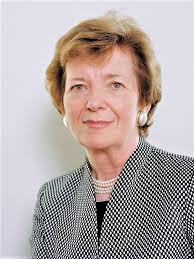
Mary Robinson, the former President of Ireland and United Nations High Commissioner for Human Rights, remains a vital figure in contemporary discussions on human rights and climate change. Her work has inspired countless individuals and organisations to advocate for social justice and environmental sustainability. As climate crises intensify globally, Robinson’s insights are increasingly significant, highlighting the intersection of human rights and climate action.
A Legacy of Advocacy
Born on May 21, 1944, in Ballina, County Mayo, Ireland, Robinson has dedicated her life to public service and advocacy. Serving as Ireland’s first female president from 1990 to 1997, she was instrumental in modernising the Irish political landscape and championing the cause of human rights both domestically and internationally. Following her presidency, she became the UN High Commissioner for Human Rights from 1997 to 2002, during which she emphasized the importance of addressing root causes of conflict and poverty.
In 2018, Robinson founded the Mary Robinson Foundation – Climate Justice, focusing on promoting an equitable approach to climate policy. Her work bridges the gap between climate change and human rights issues, urging world leaders to consider the most vulnerable populations affected by climate change, such as women, indigenous communities, and people living in poverty.
Recent Events and Current Impact
Recently, Robinson has been a prominent voice at international climate summits, including COP26, where she emphasised the moral responsibility of wealthier nations to support developing countries in their climate adaptation efforts. Her advocacy was particularly focused on the need for accountability around climate finance, pushing for substantial commitments that recognise the disproportionate impact of climate change on poorer nations.
Moreover, Robinson has been vocal about the convergence of social justice issues and climate crisis, calling for inclusive decision-making processes that take into account diverse voices, particularly those of young activists and marginalised communities.
Conclusion
Mary Robinson’s contribution to human rights and climate justice is both profound and essential. Her ongoing advocacy highlights the urgent intersection of these global challenges and inspires a generation to engage in meaningful action. As discussions around climate change intensify, understanding Robinson’s work may help foster a more equitable world, where human rights are at the forefront of climate action. Her vision for a just and sustainable future continues to resonate, reminding us of the importance of solidarity and collective responsibility.