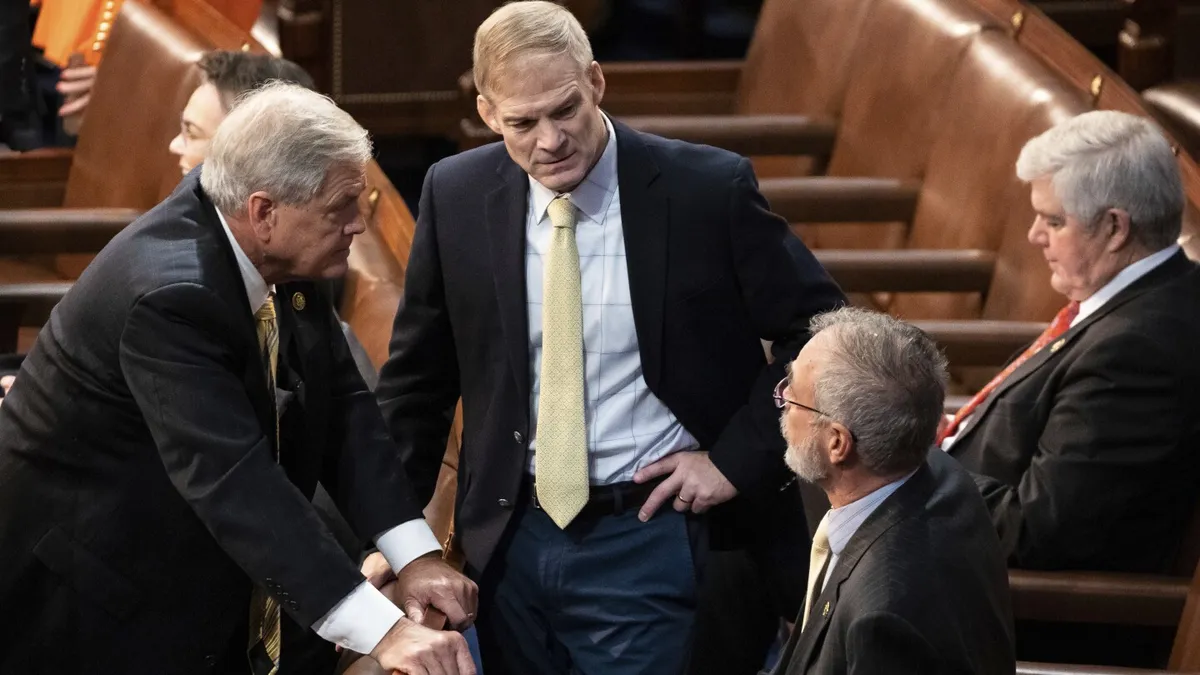
Jim Jordan has undergone a rebranding effort in the past three years to broaden his support within the Republican Party. As the House Judiciary Chair, he has been a prominent figure in the party, known for his staunch conservative views. However, his journey has not been without challenges, particularly during his bid for the speaker’s position in 2023, which highlighted divisions within the party.
Recently, there has been growing speculation about Jordan’s potential leadership ambitions, especially if Republicans lose their majority in the upcoming elections. While he has not publicly declared his intentions, observers note that he is perceived to be preparing for a leadership bid. His fundraising efforts have been notable, with over $1.3 million raised for the National Republican Congressional Committee, showcasing his commitment to supporting the party.
Jordan’s approach has included changing some of his policy stances to appeal to a broader base within the party. He has campaigned for candidates who opposed him during his speaker bid, indicating a willingness to unite the party despite previous tensions. “I just help everyone, that’s always been my mindset,” he stated, reflecting his desire to foster collaboration among party members.
However, this shift has not come without its complications. Jordan’s previous refusal to support non-Freedom Caucus members has affected his leadership aspirations, and his evolving stance has caused division among some members of the Freedom Caucus. Observers are keenly watching how these dynamics will play out as the party navigates its future.
In the landscape of potential leadership contenders, Jordan faces competition from figures like Steve Scalise and Tom Emmer. Each brings their own strengths and challenges to the table, making the race for leadership within the party increasingly competitive. Jordan’s fundraising efforts have included supporting ideologically diverse members, which may help him build a coalition if he decides to pursue a leadership role.
As the political climate shifts, Jordan has publicly stated he is focused on helping Republicans maintain their majority. “It wouldn’t be very smart to not think about the possibility of losing the majority,” he remarked, emphasizing the importance of strategic planning in the face of potential electoral challenges. This forward-looking perspective may resonate with party members who are concerned about the upcoming elections.
Details remain unconfirmed regarding Jordan’s exact plans for a leadership bid, and the impact of his changing policy stances on his support within the party remains unclear. Nonetheless, his actions and statements suggest that he is positioning himself as a key player in the future of the Republican Party.
As the political landscape continues to evolve, Jordan’s journey will be closely watched by both supporters and critics alike. His ability to navigate the complexities of party dynamics and maintain support from various factions will be crucial as he contemplates his next steps in the Republican leadership arena.