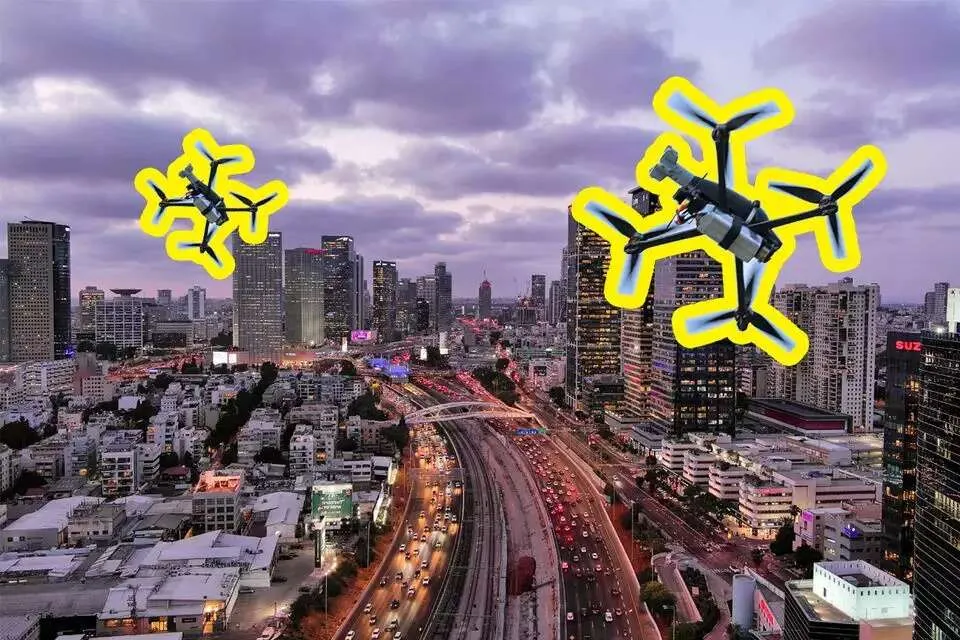
On May 3, 2026, Hezbollah’s deployment of fiber-optic drones in southern Lebanon marked a significant escalation in drone warfare capabilities, resulting in casualties and new challenges for Israeli defense systems.
In a tragic turn of events, two soldiers and one civilian lost their lives due to these advanced drones, with at least 15 others wounded. This incident has sent shockwaves through the region, as the threat posed by Hezbollah’s UAVs becomes increasingly apparent.
The IDF has openly acknowledged that they currently lack effective solutions to counter this emerging threat. A senior security official noted, “Given the ability to connect to the pilot through the cellular network, a drone that is a tactical tool becomes a strategic threat.” The use of cellular networks allows these drones to be piloted from unlimited distances with high reliability.
This capability represents a paradigm shift in drone warfare. The technology enabling such operations has been in use since November 2023 and has already shown its potential against American reconnaissance aircraft by Iran’s upgraded Shahed drones.
Key facts:
- Hezbollah’s fiber-optic drones have caused casualties among both military personnel and civilians.
- The IDF admits there are no current solutions to counter these UAVs.
- The ability to operate drones via cellular networks allows for reconnaissance and attacks from within enemy territories.
Former senior security officials have expressed concern about this development. One stated, “If the Russians have this capability, then the Iranians certainly have it too.” Such a reality raises alarms about the broader implications for regional security.
As Hezbollah continues to develop its drone capabilities, the Israeli defense landscape may need to adapt rapidly. A senior security official emphasized, “We must not fall into the thinking that just because we did not imagine the threat, we will not address it.” The urgency is palpable as both sides prepare for what could be an unprecedented phase in regional conflicts.