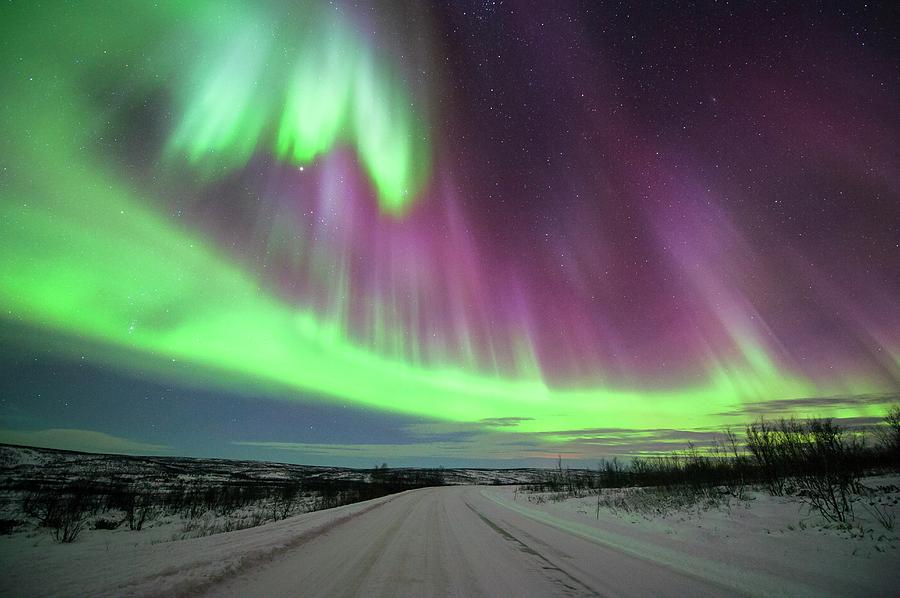
Introduction to the Aurora Borealis
The Aurora Borealis, commonly known as the Northern Lights, is one of nature’s most spectacular displays. This extraordinary atmospheric phenomenon occurs when charged particles from the sun collide with gases in Earth’s atmosphere, resulting in vibrant flashes of green, pink, violet, and occasionally red hues. Its grand display is not only a breathtaking sight but also plays a critical role in understanding solar activity and its effects on our planet.
Scientific Background
The Aurora Borealis is primarily visible in polar regions, such as northern Canada, Alaska, Norway, and Sweden, and is typically most active during the winter months when the nights are longest. The phenomenon occurs when solar wind—a stream of charged particles released from the sun—interacts with Earth’s magnetic field. This interaction creates a cascade of light as electrons collide with atmospheric gases, exciting the gases and causing them to glow.
Recent Developments and Observations
As of late 2023, interest in the Aurora Borealis has surged, particularly among tourists and scientists alike. The recent increase in solar activity, attributed to Solar Cycle 25, has resulted in more frequent and vivid auroral displays. Reports from various northern locations indicate that visitors have experienced some of the most intense auroras in decades. Events in early October 2023, for instance, saw auroras visible as far south as the Midwest United States, causing excitement within the astronomical community and among sky-watchers.
Impacts on Daily Life and Technology
Beyond its aesthetic appeal, the Aurora Borealis has significant implications for technology and daily life. Increased solar activity can disrupt satellite communications, GPS systems, and power grids. In October 2023, the enhanced magnetic storms were monitored closely by scientists to assess potential effects on Earth’s infrastructure. Understanding these events helps in forecasting space weather and thereby mitigates the risks associated with technological disruptions.
Conclusion and Future Outlook
The aurora borealis serves as a stunning reminder of the dynamic relationship between our planet and the sun. As interest in this natural wonder continues to grow, it encourages both tourism in polar regions and scientific research into astronomical phenomena. Looking forward, researchers will focus on enhancing predictive models for solar storms to better prepare for their effects. For enthusiasts, now is an excellent time to observe the Northern Lights, as increased solar activity ensures more frequent and stunning displays. Capture the moment while you can, for the aurora borealis is truly a fleeting masterpiece of nature.