Introduction
Comet Lemmon has recently gained attention among astronomers and skywatchers alike due to its brilliant display in the night sky. Discovered in 2009 by the Mount Lemmon Survey in Arizona, this comet continues to captivate enthusiasts with its striking visual characteristics and potential for scientific study. Observing such comets is significant for understanding the dynamics of our solar system and the origins of celestial bodies.
Discovery and Characteristics
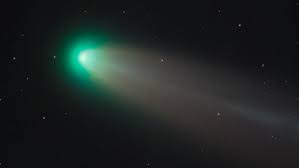
Comet Lemmon, officially designated C/2009 R1, was identified as part of an extensive survey project aimed at locating near-Earth objects. This comet has a long orbital period, taking it approximately 10,000 years to complete one revolution around the Sun. With a noticeable greenish hue and a lengthy tail extending millions of kilometres, it provides a fantastic opportunity to study cometary behaviour and composition.
The comet’s brightness peaked in early 2013, allowing keen observers to view it with the naked eye from certain locations on Earth. Observatories worldwide captured stunning images, showcasing its ethereal beauty and unique structure.
Recent Observations
Recent observations of Comet Lemmon have turned attention to its changing morphology and brightness. In September 2023, amateur astronomers equipped with powerful telescopes noted alterations in its tail and coma, suggesting a change in activity as it approaches its perihelion, or closest point to the Sun. This ongoing study is crucial because it may lead to insights into how comets evolve as they orbit the Sun and undergo thermal cycling.
Scientific Importance
Comet Lemmon is not just an aesthetically pleasing object; it serves as a valuable key for scientists studying the primordial materials that formed our solar system. Comets like Lemmon are considered leftover building blocks from the early solar system, consisting of ice, dust, and other organic compounds. By analysing the chemical composition of its material, researchers can gain insights into the conditions present during the formation of planetary bodies.
Conclusion
As Comet Lemmon continues its journey through the solar system, it presents an exciting opportunity for both professional and amateur astronomers. Future close observations may provide substantial insights into the dynamic processes that dictate comet behaviour and formation. For skywatchers, this brilliant celestial visitor serves as a reminder of the beauty and complexity of our universe. Local astronomy clubs and observatories encourage interested individuals to engage with ongoing research projects to foster a deeper understanding of cosmic phenomena.