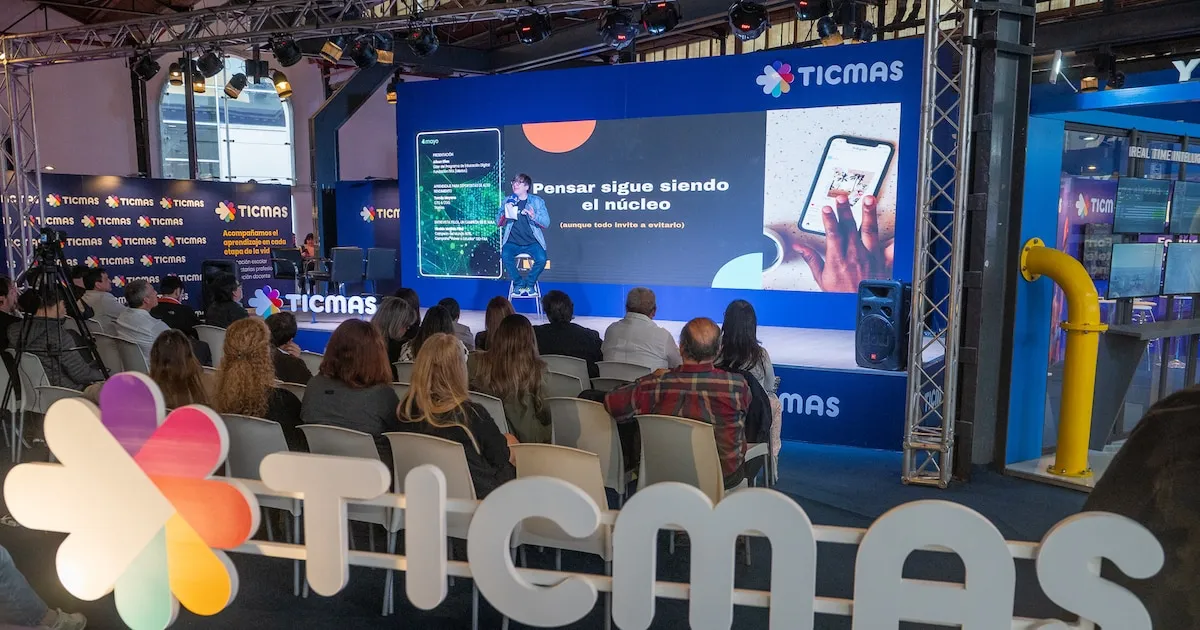
The VII Seminar on Educational Innovation took place at the International Book Fair in Buenos Aires, gathering educational leaders to tackle pressing challenges facing modern education. With a focus on integrating artificial intelligence and enhancing teacher training, this event aimed to reshape pedagogical approaches across Latin America.
For seven years, this seminar has served as a vital platform for discussing educational innovation. This year, it spanned three days and included prominent figures such as María Victoria Angulo, former Minister of Education of Colombia, who delivered the inaugural conference. She raised critical questions about how to ensure meaningful educational pathways in an age where many students struggle with basic learning outcomes.
Key themes discussed included:
- The importance of pedagogy over technology in effective teaching methods.
- The dual nature of knowledge and its implications for using artificial intelligence in classrooms.
- The need for collaboration between public and private education sectors to enhance learning experiences.
Gloria Figueroa emphasized that pedagogy must guide the use of technology, stating, “La intención pedagógica va por delante de la tecnología.” This sentiment resonated throughout the seminar as participants explored how technology can serve educational purposes effectively.
Tomás Balmaceda introduced the concept of ‘natives’—students who have grown up with technology—and highlighted the need for critical thinking skills. He remarked, “Sin fricción, no hay aprendizaje,” underlining that challenges often drive deeper understanding.
Additionally, Luis Alberto Bogado shed light on successful collaborations between public and private education initiatives in Misiones, Argentina. These partnerships have shown promising results in improving educational outcomes and motivation among students.
As discussions unfolded, a consensus emerged: educators must adapt to new realities while ensuring that technology enhances rather than detracts from learning. Irma Ibarra reinforced this notion by stressing that technology should serve clear educational goals.
The seminar concluded with a hopeful outlook on Medellín’s upcoming recognition as the world book capital, as shared by Carolina Franco Giraldo. This acknowledgment reflects a growing commitment to improving literacy and fostering a culture of reading across communities.