Introduction
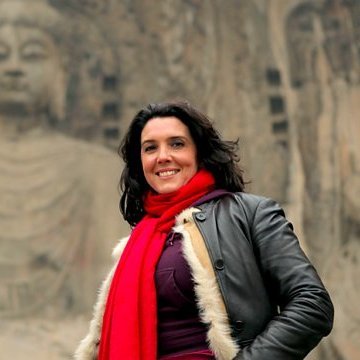
Bettany Hughes is a prominent British historian, author, and broadcaster, celebrated for her ability to illuminate history through engaging narratives. Her work has had a significant impact on the way history is presented to the public, particularly in the context of women’s roles in historical events. As a pioneer in her field, Hughes’s contributions are not only scholarly but also serve to inspire a broader audience to connect with history.
Bettany Hughes’ Career and Contributions
Born in 1967, Hughes has always shown a remarkable interest in history and the arts. She studied at New College, Oxford, where she developed a foundation in classical studies—an influence that is evident in much of her work. Hughes gained widespread recognition with her BBC documentary series, such as “The Histories of the World in 100 Objects,” where she brought objects to life by exploring their historical significance.
Her books further exemplify her talent for blending academic research with accessible storytelling. Titles like “The Hemlock Cup,” which examines the life of the ancient philosopher Socrates, and “The History of Ancient Egypt” reflect her in-depth knowledge and passion for history. Hughes’s narratives often uncover the roles of intriguing women from history, challenging traditional male-dominated narratives.
Recent Projects and Influence
In recent years, Hughes has continued to engage the public through various platforms. She was involved in significant discussions on the historical implications of current global issues, such as climate change and social justice. Her work has not only focused on ancient narratives but also extends to contemporary concerns, connecting history with present-day dilemmas.
Additionally, Hughes has appeared in numerous documentaries, lecture series, and podcasts, furthering her reach and relevance. She was appointed as a BBC Radio 3 presenter, which provided another avenue to engage audiences with her historical insights.
Conclusion
Bettany Hughes’s place in the realm of history is an essential one, as she continues to bridge the gap between academia and the general public. Her passion for storytelling and her unique perspective on history enrich our understanding of the past, making it accessible for everyone. Looking ahead, Hughes’s influence is likely to grow as she tackles more contemporary issues through the lens of historical context, encouraging future generations to appreciate and learn from history.