Introduction to the Annular Solar Eclipse
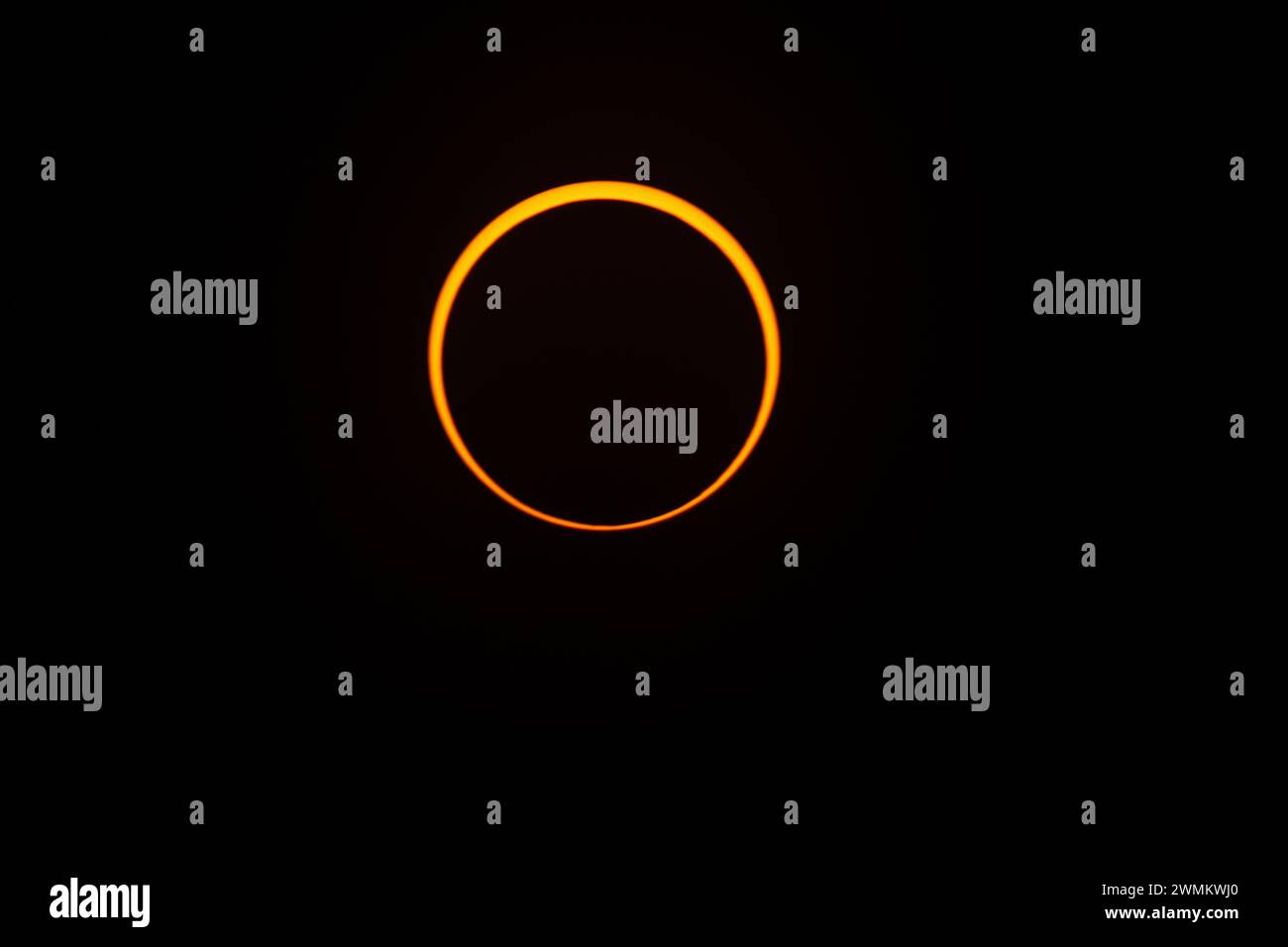
The upcoming annular solar eclipse on 14 October 2023 is a significant astronomical event that promises to capture the attention of skywatchers worldwide. This phenomenon occurs when the Moon passes between the Earth and the Sun, but the apparent size of the Moon is smaller than that of the Sun. As a result, a ring of the Sun’s surface, or photosphere, remains visible, creating what is often referred to as a ‘ring of fire’ in the sky. The importance of this event extends beyond its beauty; it also serves as a reminder of the incredible celestial mechanics at play in our universe.
Details of the Event
The annular solar eclipse will be visible from several regions across the United States, Central America, and parts of South America. In the US, states including Oregon, California, Nevada, Utah, Colorado, Arizona, New Mexico, and Texas will experience the full annularity, where observers can witness the full ‘ring of fire’ effect. Partial views will be available to a much larger area, extending across various states and into parts of south-eastern Canada.
The eclipse will begin at around 11:13 a.m. PDT on the West Coast, and the ring of fire will be visible for up to 5 minutes in certain locations, depending on the observer’s proximity to the centerline of the eclipse. Those lucky enough to be within the annular path are encouraged to use proper solar viewing glasses or eclipse viewers to safely enjoy the event.
The Significance of Solar Eclipses
Solar eclipses, including annular events, have been celebrated and revered throughout history. They provide not only striking visual phenomena but also opportunities to conduct scientific observations, such as studying the Sun’s corona or testing theories about light and gravity. The upcoming event is particularly noteworthy as it follows closely on the heels of the total solar eclipse in April 2024, making this a unique period for astronomical events.
Conclusion
The annular solar eclipse on 14 October 2023 is expected to be a spectacular sight that will draw observers to designated viewing areas. For astronomy enthusiasts and casual observers alike, this event is an opportunity to witness a rare celestial event. As the date approaches, preparations for safe viewing should be prioritised to ensure that everyone can enjoy this magnificent display of our solar system.