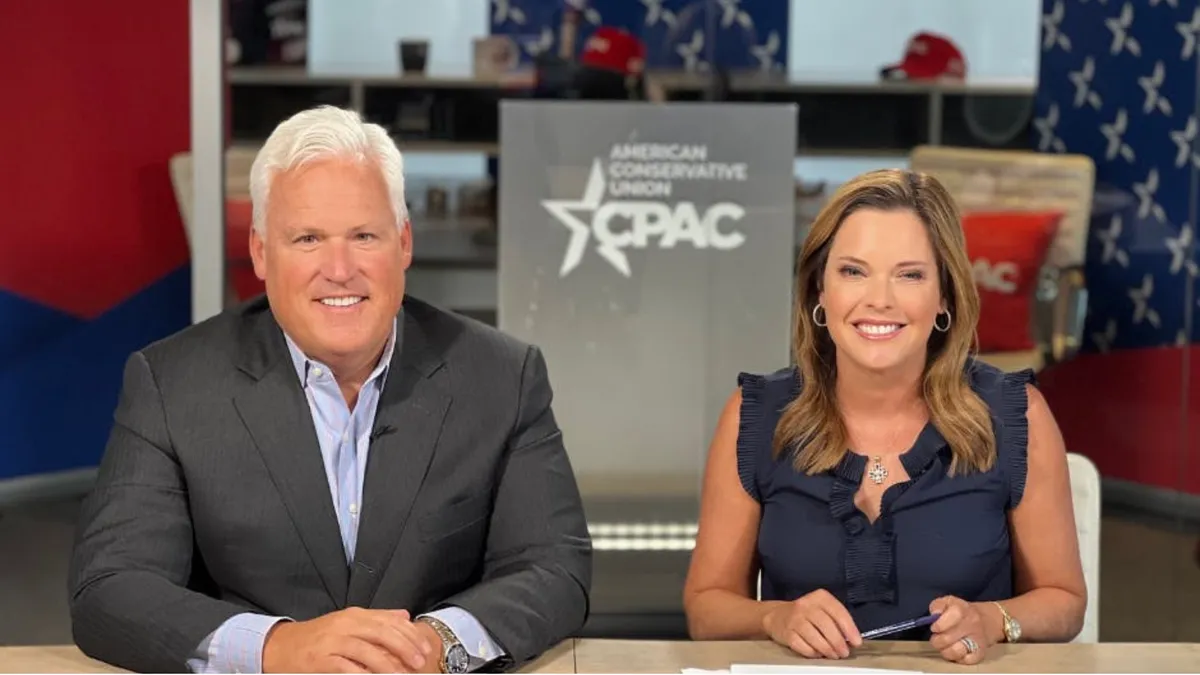
The Conservative Political Action Conference (CPAC) has long been recognized as a cornerstone event for conservatives, drawing major political figures and activists from across the nation. Historically, it has been a vibrant gathering where ideas are exchanged and strategies are formed, often featuring lively social events that foster community among attendees.
However, as CPAC approaches its 2026 iteration in Grapevine, Texas, it finds itself grappling with significant challenges. For the first time in over a decade, former President Donald Trump will not be attending, a notable absence that many believe reflects a broader trend of declining interest in the conference.
Reports indicate that CPAC is experiencing lower attendance numbers compared to previous years, with some attendees expressing disappointment over the lack of major speakers and the overall atmosphere. The conference has also faced stiff competition from other conservative gatherings, such as Turning Point USA, which recently attracted an impressive 30,000 attendees.
Matt Schlapp, the chairman of CPAC, has acknowledged these challenges, stating, “Nobody can deny that [CPAC] is the center of political gravity.” Yet, critics like Erick Erickson have voiced concerns, suggesting that the conference has strayed from its roots as a serious conservative policy forum. Erickson remarked, “‘C’ in CPAC is now best represented by the world ‘clown’ than as any semblance of a conservative institution.”
Adding to the controversy, Schlapp’s financial dealings have come under scrutiny, with reports revealing his salary exceeded $830,000 in the 2023 tax year. This has raised questions about the direction and priorities of the conference.
As the event draws nearer, observers are left wondering what the future holds for CPAC. The reasons behind the low attendance and lack of major speakers remain unclear, and the conference’s ability to maintain its status as a significant conservative gathering is uncertain. Details remain unconfirmed.
Despite these challenges, some attendees remain hopeful, with figures like Enrique Tarrio reminding everyone, “It’s a midterm year,” suggesting that the political landscape may shift in the near future.
As CPAC 2026 unfolds, it will be crucial to see how the conference adapts to these challenges and whether it can reclaim its position as a vital forum for conservative thought and action.