On April 29, 2026, the Supreme Court issued a landmark decision that significantly narrows the protections of the Voting Rights Act. This ruling allows states like Louisiana to enact racially discriminatory electoral maps with minimal oversight.
The case, known as Louisiana v. Callais, revolved around a congressional map drawn by Louisiana officials after the 2020 census. The map was initially designed to create two majority-Black districts, reflecting the fact that one-third of Louisiana’s population is Black. However, the Supreme Court’s ruling invalidated this map and opened the door for potential racial gerrymandering.
In a decisive 6-3 vote, Justice Samuel Alito wrote that while the court was not striking down Section 2 of the Voting Rights Act, it required proof of intentional discrimination to challenge electoral maps. Justice Elena Kagan, dissenting from the majority opinion, argued that this interpretation effectively eviscerates four decades of protections under the Voting Rights Act.
This ruling comes after four years of litigation over Louisiana’s congressional map and follows a troubling trend. The Supreme Court previously eliminated the Voting Rights Act’s preclearance system in its 2013 decision in Shelby County v. Holder, which had been crucial for preventing discriminatory practices.
As a result of this latest decision, states can redraw district lines that may undermine minority voters’ political power. Experts believe that this could lead to a redistricting wave benefiting Republicans by flipping majority-minority seats currently held by Democrats. Specifically, there are concerns that up to nineteen majority-minority seats could be at risk.
The implications of this ruling are profound for communities across Louisiana and beyond. Derrick Johnson, president of the NAACP, stated emphatically, “Today’s decision is a devastating blow to what remains of the Voting Rights Act and a license for corrupt politicians who want to rig the system by silencing entire communities.” This sentiment echoes widely among civil rights advocates.
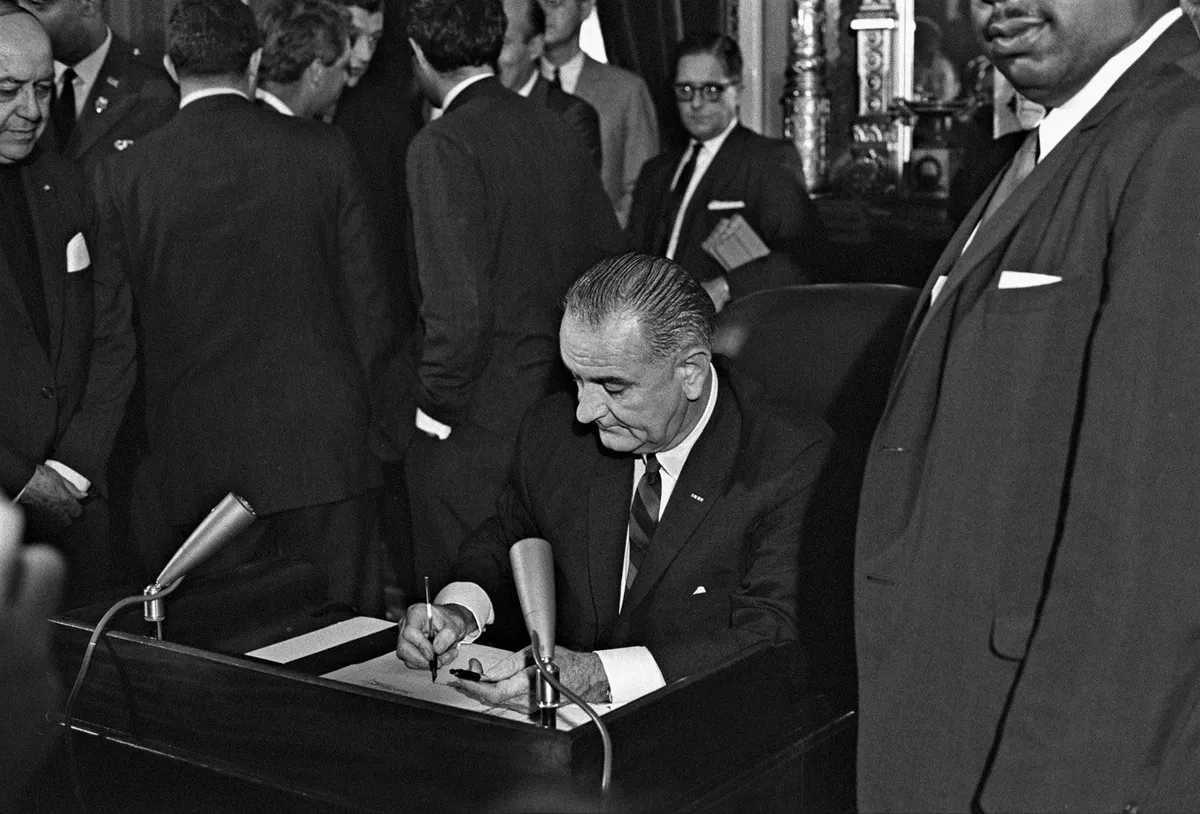
The Voting Rights Act was originally signed into law following violent protests in Selma, Alabama—an event that highlighted systemic racism and discrimination at the polls. Now, as this landmark legislation faces new challenges, many fear that its foundational principles are at stake.
With a deadline set for 2024 for Louisiana to draw a new congressional map, local leaders and activists are bracing for what could be an intense fight over representation and equality in voting.