“Tonight, truth prevailed over lies. Today, we won because Hungarians didn’t ask what their homeland could do for them — they asked what they could do for their homeland,” declared Péter Magyar, the newly elected leader of Hungary, as he celebrated a decisive victory over Viktor Orbán on April 12, 2026.
After 16 years at the helm, Orbán conceded defeat in an election that saw a remarkable voter turnout of nearly 80%, a record in Hungary’s post-Communist history. His party, Fidesz, garnered only 37% of the vote, while the opposition party Tisza claimed a commanding 53%, winning 94 out of 106 voting districts.
The election results mark a significant turning point in Hungarian politics, as Orbán’s government has faced increasing scrutiny for its authoritarian tendencies and strained relations with the European Union. Under his leadership, Hungary has been accused of undermining democracy and media freedom, leading to a growing divide between Budapest and Brussels.
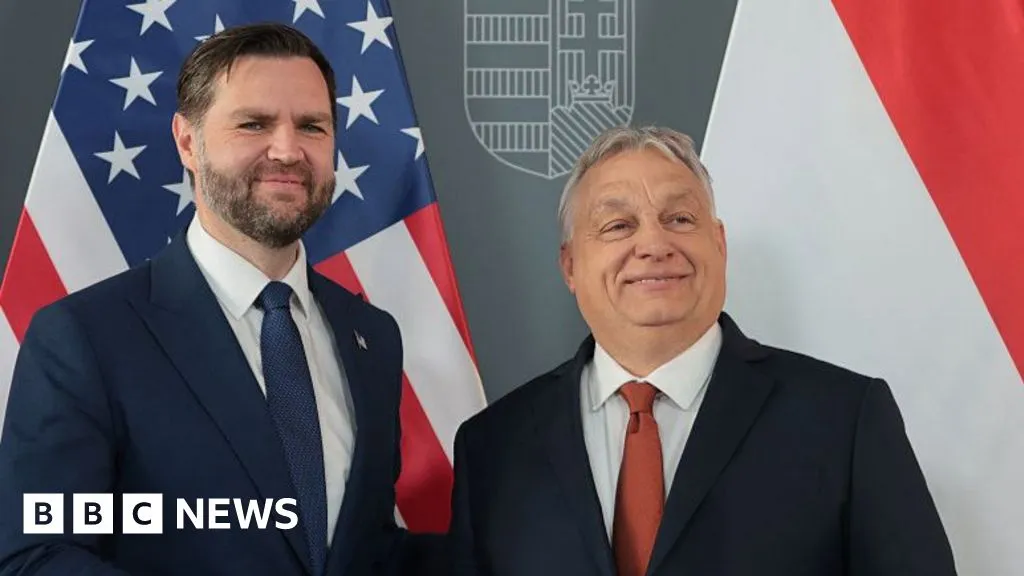
JD Vance, a prominent supporter of Orbán, had visited Hungary just days before the election, urging citizens to back the long-time prime minister. “We have got to get Viktor Orbán reelected as prime minister of Hungary, don’t we?” he had said, reflecting the hopes of many in the far-right political sphere. However, the election results suggest that the Hungarian electorate was ready for change.
Orbán’s defeat is expected to transform political dynamics not only within Hungary but also across the European Union. His administration has been a close ally of both Donald Trump and Vladimir Putin, and his policies have often put Hungary at odds with EU directives. The former prime minister’s refusal to assist Ukraine amid the ongoing Russian invasion has further complicated Hungary’s international standing.
As Magyar prepares to take office, he faces the challenge of uniting a nation that has been deeply polarized under Orbán’s rule. His victory signifies a desire for a new direction, one that prioritizes democratic values and cooperation with the EU. Orbán, in his concession speech, stated, “We are going to serve the Hungarian nation and our homeland from opposition,” indicating his intention to remain a significant player in Hungarian politics.
The implications of this election extend beyond Hungary’s borders, as Orbán’s government has frequently used its veto power within the EU, impacting decisions on critical issues, including a €90 billion loan that was vetoed by Orbán. With his departure, many are watching closely to see how Hungary’s relationship with the EU will evolve under new leadership.
As the dust settles on this historic election, the Hungarian people are left to navigate a new political landscape, one that promises to be shaped by the ideals of service to the homeland and a commitment to democratic principles. The future remains uncertain, but the call for change has been heard loud and clear in Budapest.