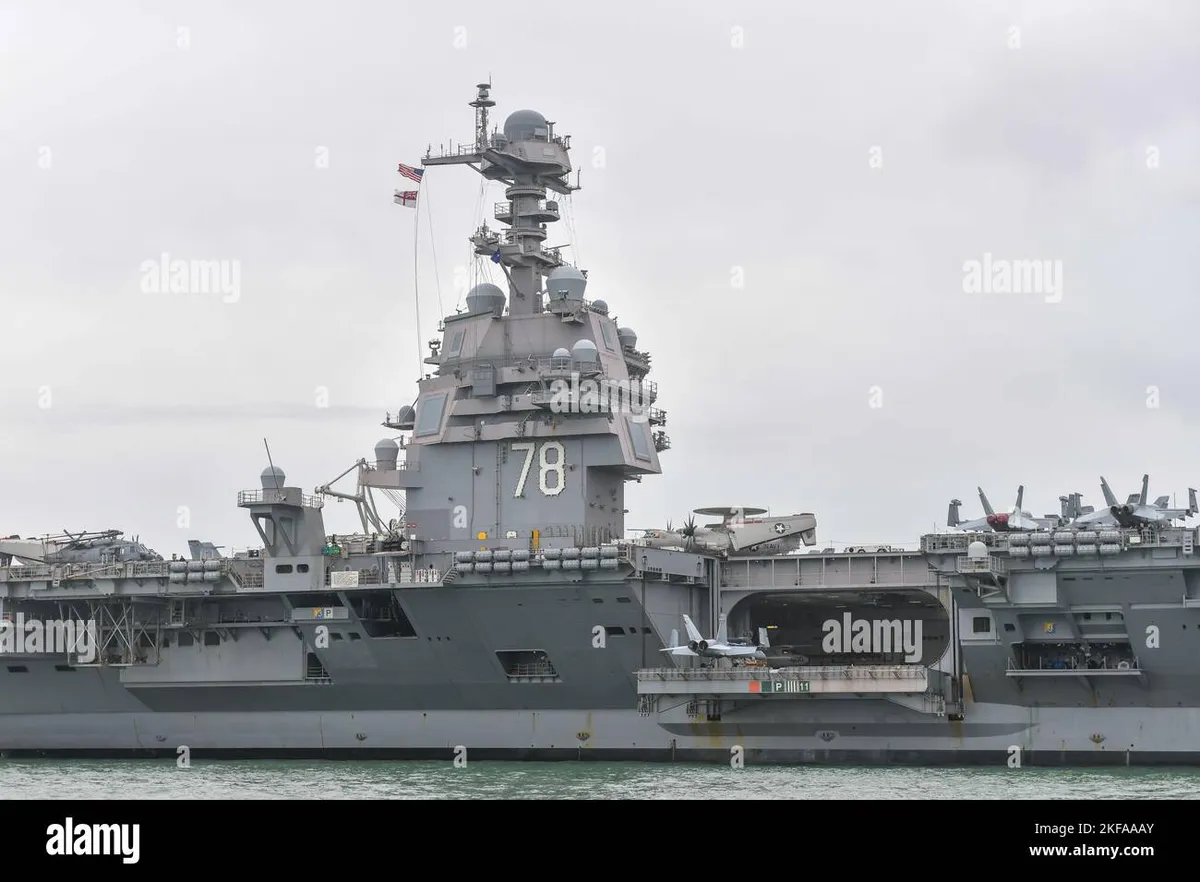
In a significant development, the USS Gerald R. Ford, the largest and most powerful aircraft carrier in the United States Navy, is currently navigating challenges during its extended deployment in the eastern Mediterranean Sea. This deployment, which began under President Donald Trump’s administration, has been marked by a recent fire incident that occurred in mid-March 2026, affecting the daily lives of approximately 4,500 sailors on board.
The fire broke out in the laundry department of the USS Gerald R. Ford, leading to a frantic 30-hour effort by the crew to extinguish the flames and prevent them from reigniting. Fortunately, no sailors were seriously injured in the incident, but the damage resulted in about 600 sailors losing access to their bunks, creating a challenging living situation aboard the vessel.
The USS Gerald R. Ford has been on track to break the record for the longest deployment of an aircraft carrier since the Vietnam War, a testament to its strategic importance. With a cost of $13 billion, this nuclear-powered aircraft carrier is equipped with advanced capabilities, including an electronic catapult system that allows it to launch a variety of aircraft. Such features are vital for maintaining an operational presence in regions of geopolitical interest, particularly in light of ongoing military operations in Iran and Venezuela.
Brent Sadler, a naval expert, emphasized the importance of the USS Gerald R. Ford in maintaining U.S. military readiness, stating, “If we didn’t have the Ford, we would be struggling to maintain an operational presence, but we’d also be struggling to keep our aircraft carriers ahead of our enemies.” This sentiment reflects the broader concerns among military families and communities about the implications of extended deployments.
Amini Osias, a family member of a sailor aboard the USS Gerald R. Ford, expressed the emotional toll of such deployments, saying, “It’s constant uncertainty that we live on a daily basis.” The stress of long deployments not only affects the sailors but also their families back home, who are left to navigate the challenges of separation and worry about their loved ones in potentially dangerous situations.
In an effort to support the crew’s mental well-being, a therapy dog named Sage has been serving on the USS Gerald R. Ford since 2023. This initiative aims to relieve stress among sailors, highlighting the importance of mental health resources in the military. As the crew continues to adapt to the challenges of their deployment, the presence of such support systems can make a significant difference.
As the USS Gerald R. Ford continues its mission in the eastern Mediterranean, the situation remains dynamic. The ship’s deployment has already been extended twice, reflecting the ongoing demands placed on the U.S. Navy in a complex global landscape. While the immediate challenges of the fire incident have been addressed, the broader implications of extended military presence in the region are still unfolding.
Details remain unconfirmed regarding the long-term impact of these challenges on the crew and their families. However, the resilience of the sailors aboard the USS Gerald R. Ford and the support from their families and communities remain crucial as they navigate these trying times.