The numbers
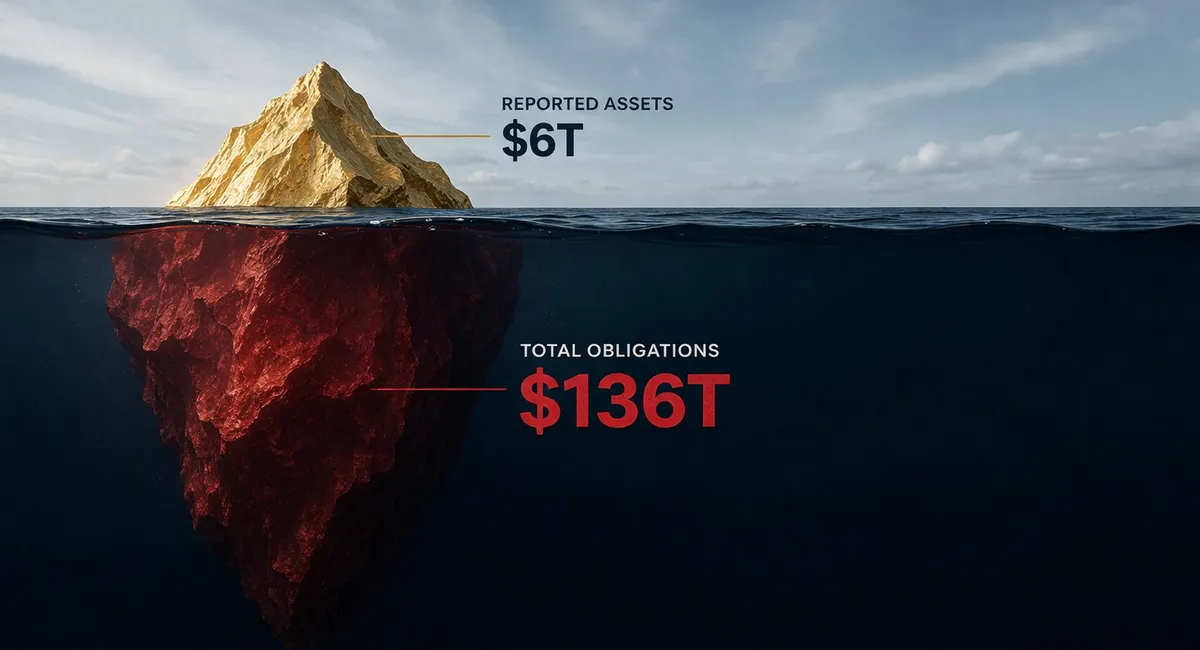
The U.S. Treasury’s financial statements for fiscal year 2025 paint a stark picture of the nation’s financial health, revealing a negative net position of $41.72 trillion. With total federal promises exceeding $136.2 trillion when accounting for unfunded Social Security and Medicare obligations, the implications of these figures are profound.
For the past 29 consecutive years, the Government Accountability Office (GAO) has declined to certify the U.S. government’s financial statements, raising concerns about transparency and accountability. The latest report indicates that the U.S. Treasury holds $6.06 trillion in assets against a staggering $47.78 trillion in liabilities, meaning total liabilities are nearly eight times the reported assets.
The federal debt has surged to $30.33 trillion, marking a $2 trillion increase from the previous year. Additionally, federal employee and veteran benefits payable have reached $15.47 trillion, up by $438.8 billion. This escalating debt is compounded by a 75-year unfunded social insurance obligation that has skyrocketed by $10.1 trillion in just one year, now totaling $88.4 trillion.
As the fiscal gap widened from 4.3% of GDP in FY 2024 to 4.7% in FY 2025, analysts are sounding alarms about a potential fiscal catastrophe. Interest payments alone now consume 13% of the federal budget, leaving little room for essential services and programs.
Despite these alarming figures, the U.S. government can still borrow and create currency, a fact that some analysts argue mitigates the immediate threat of insolvency. However, the sentiment is clear: “The U.S. government just admitted it’s insolvent,” highlighting a growing recognition of the precarious financial situation.
One analyst remarked, “Uncle Sam, by any accounting standard, is insolvent,” emphasizing the severity of the situation. The government’s ability to stay afloat hinges on its capacity to print dollars and roll over old debt into new loans, a practice that raises questions about long-term sustainability.
As the nation grapples with these financial realities, observers are left to ponder the future. The point is that the underlying trajectory has shifted — confirmed now by the government’s own accounting. Details remain unconfirmed regarding the potential impacts of these financial challenges on future governance and economic policy, leaving communities across the nation to brace for the implications of this growing insolvency crisis.