Introduction
Interstellar comet 3I ATLAS, first identified in December 2019, has captured the imagination of both scientists and astronomy enthusiasts alike. This comet is significant because it is one of the few known interstellar objects to pass through our solar system, providing researchers an unprecedented opportunity to study the composition and characteristics of material from outside our solar system. As comets carry clues about the early solar system and beyond, understanding 3I ATLAS can shed light on the origins of our cosmic neighbourhood.
Details and Observations
3I ATLAS, which is believed to originate from the Oort Cloud, is classified as an interstellar comet due to its hyperbolic trajectory, indicating that it is not gravitationally bound to the Sun. This trajectory suggests it is on its way out of our solar system after passing closest to the Sun in May 2020. During its closest approach, scientists gained valuable insights about its structure, composition, and interaction with solar radiation.
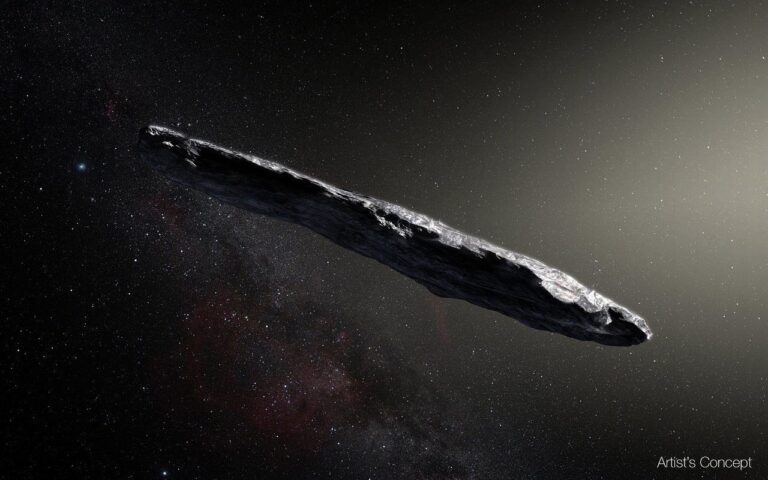
The comet was first detected by the Asteroid Terrestrial-impact Last Alert System (ATLAS) observatory based in Hawaii. Initial observations indicated that 3I ATLAS exhibits a narrow tail, characteristic of cometary bodies, and possesses an irregular shape, leading researchers to theorise that it may have undergone significant fragmentation during its journey.
Scientific Significance
The study of 3I ATLAS is crucial not only for understanding interstellar bodies but also for insights into planetary formation. Analysing the chemical makeup of 3I ATLAS allows scientists to compare the materials found in our solar system with those in other stellar systems. This comparative analysis enhances our understanding of the processes leading to planet formation and the distribution of organic compounds across the universe.
In addition to its scientific value, 3I ATLAS has sparked public interest in astronomy and the exploration of interstellar phenomena. Educators and scientists alike have used this opportunity to engage the community in discussions about Einstein’s theories and the future possibilities of interstellar travel.
Conclusion
As interstellar comet 3I ATLAS makes its way through the solar system, it represents a pivotal moment in our exploration of celestial phenomena. Researchers anticipate further observations that will unravel more secrets about this enigmatic comet. As technology advances and more interstellar objects are detected, we anticipate a deeper understanding of the universe and its origins. For readers fascinated by astronomy, the journey of 3I ATLAS reminds us of the cosmos’ vastness and the continuous quest for knowledge that fuels scientific discovery.