Introduction
The discovery of interstellar objects has opened new horizons in our understanding of the universe. One such remarkable object is Interstellar Comet 3I ATLAS, which has drawn significant attention from the scientific community, particularly NASA. This comet, which originates from outside our solar system, serves as a key subject for research into the formation of celestial bodies and the composition of interstellar material.
What is Interstellar Comet 3I ATLAS?
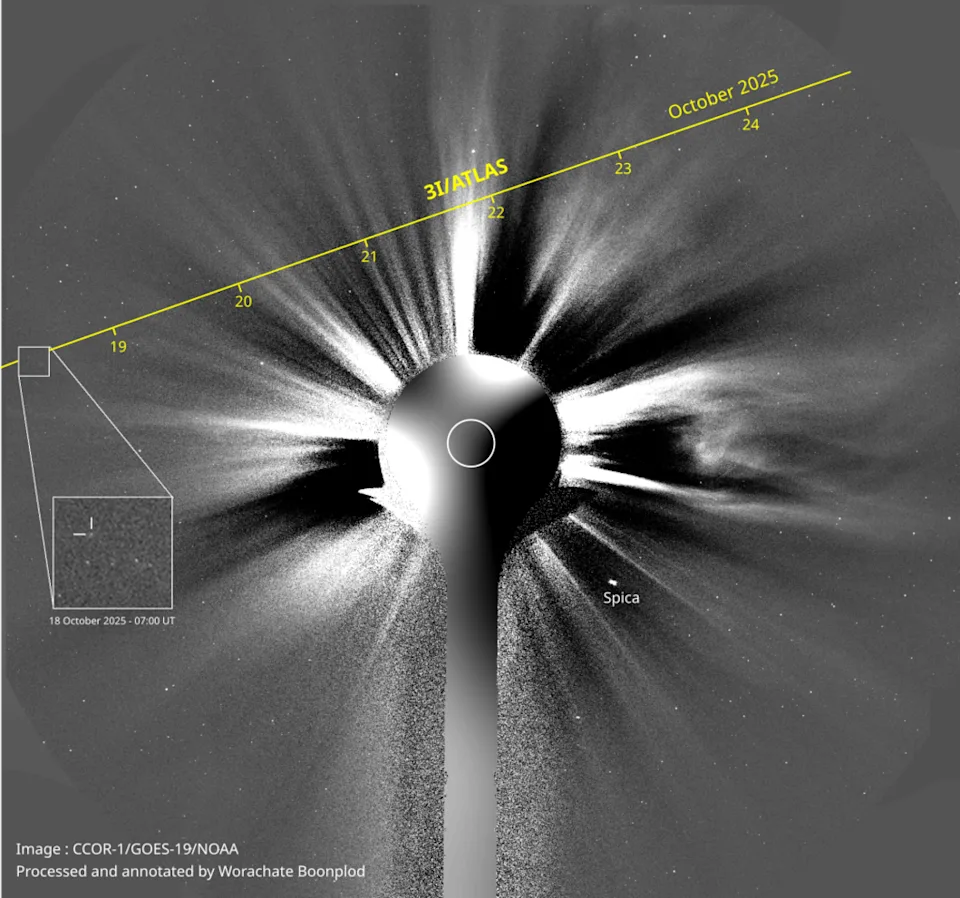
Interstellar Comet 3I ATLAS was first detected on December 19, 2019, by astronomers using the Asteroid Terrestrial-impact Last Alert System (ATLAS) in Hawaii. This comet is notable for being confirmed as an interstellar object; it is believed to have come from the direction of the constellation Pegasus. The comet has a hyperbolic trajectory, indicating that it is not bound to our Solar System and will eventually leave it.
NASA’s Research and Findings
Navigating the complexities of studying an interstellar object, NASA initiated a series of observations to understand 3I ATLAS better. The spacecraft equipped with high-powered telescopes provided valuable data on its composition and behavior. One of the key findings was that 3I ATLAS exhibited a significant amount of activity, releasing gas and dust as it approached the Sun. This behavior is typical of comets, which are often described as “dirty snowballs” consisting of ice and dust.
The comet’s unique characteristics have offered insights into the materials that may have formed in distant star systems. The data gathered by NASA’s observations contribute to a greater understanding of planetary systems’ evolution and the role of comets in delivering organic compounds to planets.
Significance and Future Implications
The exploration of Interstellar Comet 3I ATLAS is significant not only for its scientific implications but also for future research. By understanding the origins and behaviour of such comets, scientists can formulate more accurate models of how planets and their atmospheres could develop. Moreover, the discovery of other interstellar objects continues to increase the potential for finding more comets that could yield further knowledge about the universe and Earth’s own history.
Conclusion
As Interstellar Comet 3I ATLAS travels through our Solar System, it enriches our understanding of astrophysics and planetary formation. NASA’s ongoing research on 3I ATLAS and similar interstellar phenomena could lead to more significant discoveries in the future. For readers fascinated by astronomy, the study of such comets not only serves as a reminder of the vastness of our universe but also underscores the continuous pursuit of knowledge in the realms of space exploration.