Introduction
As the gaming community continues to flourish, particularly with the release of Counter-Strike 2 (CS2), players are increasingly engaging in trade ups, especially regarding knives. Knife trade ups in CS2 have gained prominence for their potential in enhancing weapon skins collection, making them a vital aspect for players and traders alike. Understanding the mechanics behind knife trade ups can not only elevate the gaming experience but can also represent a significant opportunity for profit within the game’s economy.
The Basics of Knife Trade Ups in CS2
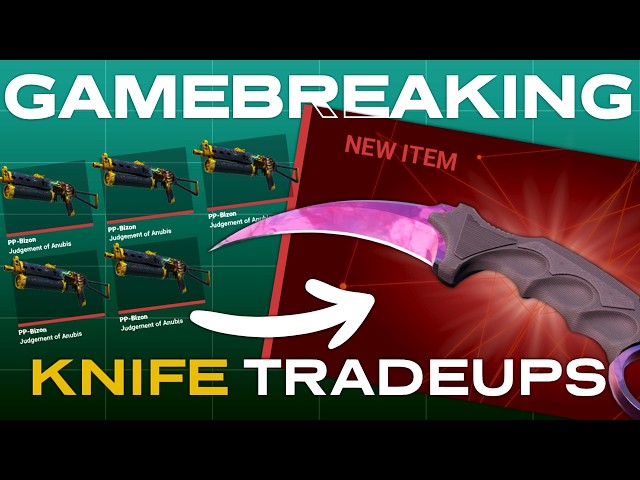
In CS2, players often encounter various skins for knives, which can be sourced through packages, contracts, and the marketplace. A trade up involves exchanging a set number of lower-tier skins for a chance to receive a higher-tier skin, potentially including a knife. The value of this feature cannot be understated, as high-quality knives can fetch hefty prices in the marketplace.
How Trade Ups Work
The fundamentals of a trade up are straightforward. Players select a certain number of skins, usually ten, to combine for a guarantee of obtaining a skin of a higher rarity. The outcome of the trade up is random; however, players can enhance their chances by selecting skins with better quality. Understanding skin quality and rarity can create significant differences in potential returns.
Current Trends and Market Insights
Recent data reports a noticeable increase in the demand and trading activity of knife skins since the transition to CS2. The market is highly influenced by player trends, fashion within the game community and popular streamers showcasing their knives. Some of the most sought-after knives include the Karambit, Bayonet, and M9 Bayonet, which are leading the trade charts.
Market Predictions
Experts in gaming item economics anticipate continued growth in the CS2 knife market. The introduction of new skins and balanced gameplay mechanics may enhance trading options. Further, updates to the game that elevate the visual appeal of skins are expected to tax the marketplace positively. Players are encouraged to stay informed about market trends and fluctuations to optimise their trading strategies.
Conclusion
The CS2 knife trade-up system offers players an engaging and potentially lucrative avenue for expanding their virtual inventory. By understanding the mechanics behind trade ups and staying informed on market trends, players can make smarter decisions in trading. As the popularity of CS2 continues to rise, knife trade ups will likely remain a significant component of the game’s economy, making it essential for players to engage responsibly and strategically.