Introduction to Council Tax Bands
Council tax bands are a significant aspect of local taxation in the United Kingdom, playing a vital role in determining how much residents need to pay for their local services. All properties are assigned a council tax band based on their estimated market value as of April 1, 1991. Understanding these bands not only helps residents gauge their financial obligations but also informs them about local governance, budgets, and services.
How Council Tax Bands Work
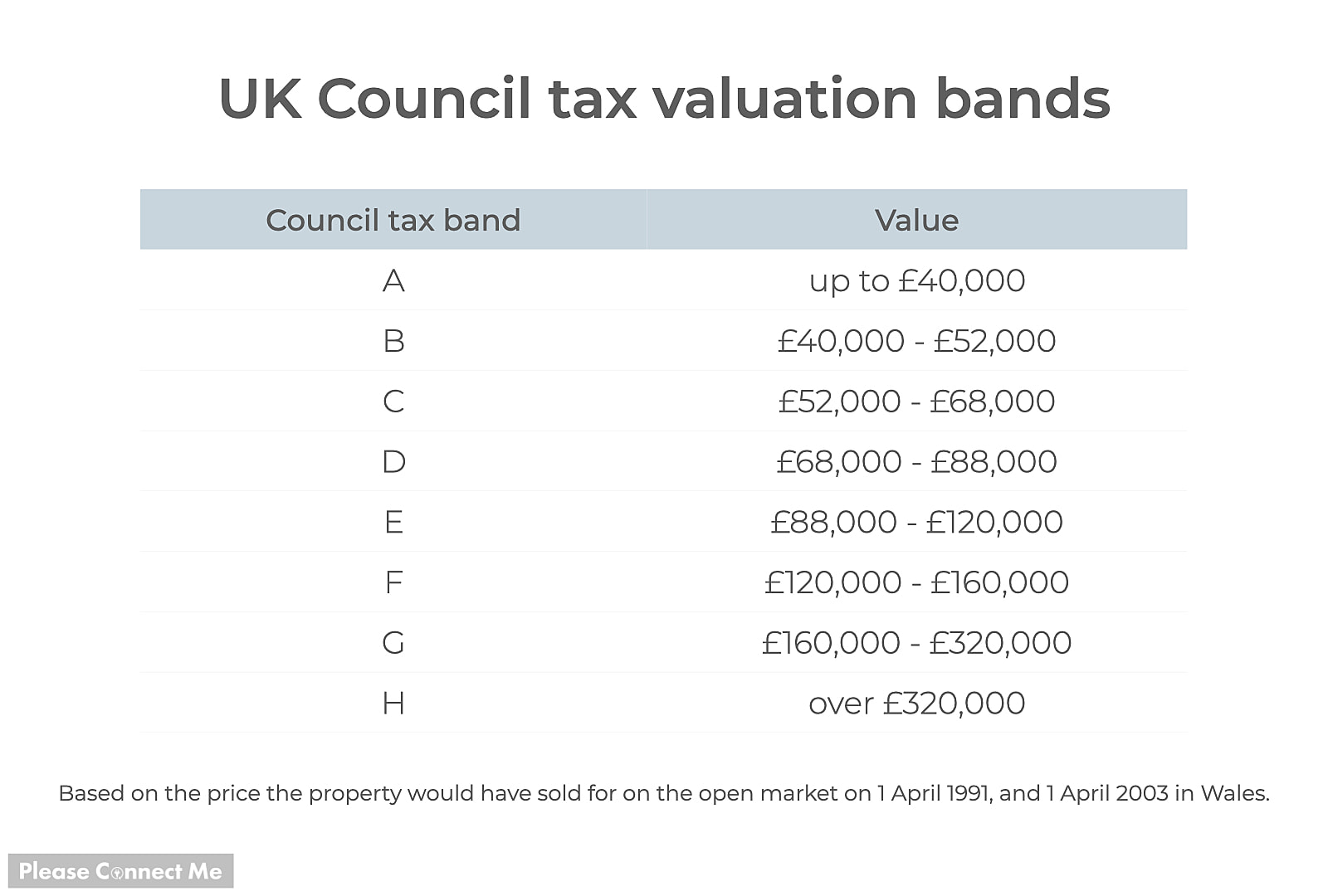
Council tax bands range from A to H, with ‘A’ representing the lowest value properties and ‘H’ the highest. The valuation is conducted by the Valuation Office Agency (VOA), which assesses all residential properties in England and Wales. Each band corresponds to a range of property values, with ‘Band A’ covering properties worth up to £40,000 and ‘Band H’ for those worth over £320,000.
The council tax rate is set by local councils and can vary widely. For instance, the average council tax bill for 2023-24 was projected to reach £1,800, with increases in many areas influenced by inflation and increased local spending needs. Councils must assess their budgets to deliver essential services, including waste management, local policing, and social care, making council tax bands pivotal for funding.
Recent Developments and Revaluations
Recently, discussions regarding revaluation of council tax bands have gained momentum. After years of static property bands, the government has proposed potential changes, particularly in light of rising property values and inflation. Reform advocates argue that a re-evaluation would address fairness in taxation, particularly in areas where property values have boomed while others have stagnated.
Moreover, the treasury has initiated pilot schemes to review the viability of banding by property size, location, and energy efficiency, setting a precedent for modernising the system. This could lead to adjustments which will share the tax burden more equitably amongst residents, catering to varying financial circumstances.
Conclusion and Significance
Understanding council tax bands is imperative for residents in navigating their local finances and responsibilities. It has direct implications on the amount of tax owed and the quality of services received in return. As discussions on reform and revaluation progress, it is crucial for residents to stay informed to advocate for their interests. Adjustments to council tax arrangements could signal significant shifts in local funding and services. Continued scrutiny on council finances and property values will ensure transparency and equity in taxation moving forward, fundamentally shaping the landscape of public services.



