Are travelers facing longer security lines at airports?
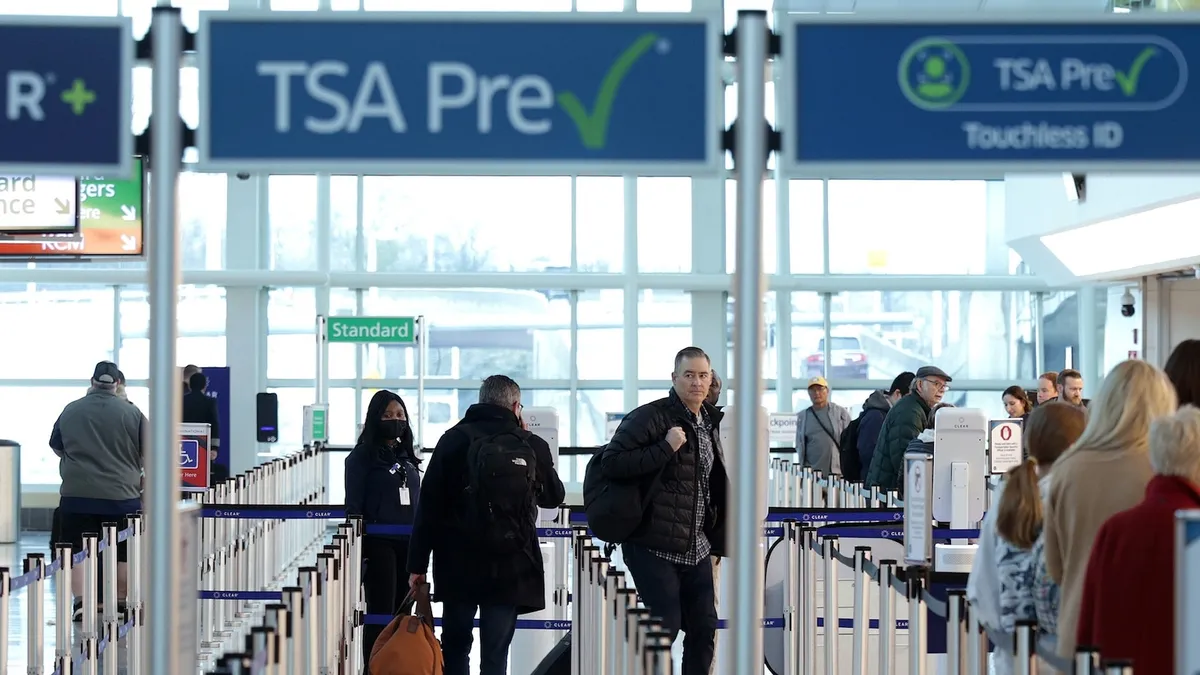
Yes, travelers are encountering unusually long airport security lines due to a partial federal government shutdown affecting TSA staffing. Reports indicate that some major airports have experienced TSA wait times exceeding an hour during peak periods.
Despite these challenges, TSA PreCheck remains operational, allowing enrolled travelers to utilize dedicated lanes, which typically have wait times of just 10 to 15 minutes even during busy travel periods. This program has become increasingly valuable as the shutdown continues.
What led to the current situation?
The partial government shutdown began in mid-February 2026 after Congress failed to pass funding for the Department of Homeland Security. As a result, TSA agents are expected to miss their first full paycheck, leading to staffing shortages. Currently, around 50,000 TSA officers are continuing to work without regular pay.
Travelers are advised to arrive three to four hours before their departure to avoid missing flights, as some airports have reported TSA lines of up to nearly three hours long, causing missed flights and massive delays.
What are the alternatives for travelers?
While TSA PreCheck remains available, the Global Entry program is currently suspended during the government shutdown. Additionally, travelers can check real-time TSA line wait times using the MyTSA mobile app and the TSA website, while some airports publish their own checkpoint wait times on official websites or social media.
For those considering expedited screening options, TSA PreCheck enrollment costs $85 and is valid for five years, while CLEAR+ membership costs $209 per year, with children 17 and under added for free. Military service members can benefit from a discounted annual rate of $125 for CLEAR+.
Details remain unconfirmed regarding the exact duration of the government shutdown and how it may further impact TSA staffing levels. As travelers navigate this challenging situation, the importance of programs like TSA PreCheck becomes increasingly evident.
As Brian Kelly noted, “I want to warn people it’s not every airport that is horrible, but some are worse than others.” This highlights the variability in airport experiences during this period of uncertainty.