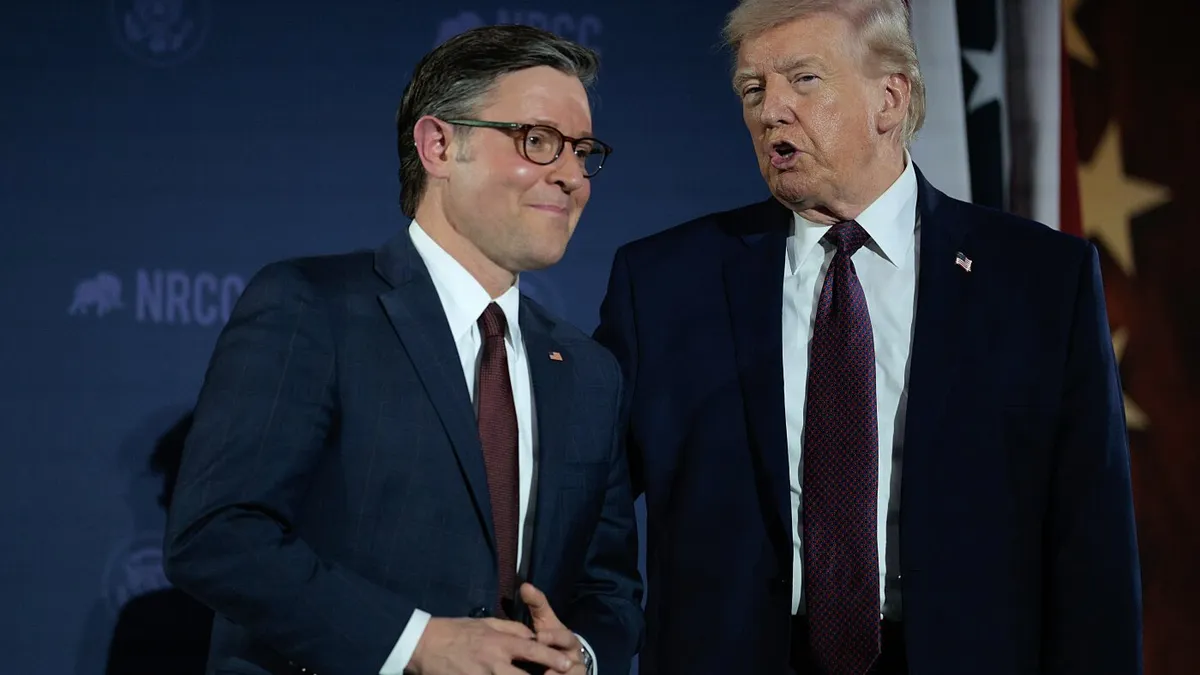
TSA funding has become a critical issue as President Trump signed a memo to ensure that TSA employees receive their paychecks amidst the ongoing Department of Homeland Security (DHS) shutdown. This decision comes as the shutdown stretches into its 44th day, causing significant disruptions in airport operations.
As a result of the shutdown, TSA workers have faced unprecedented challenges, with reports indicating that absenteeism rates have soared to 40 percent at some airports. Over 480 TSA officers have quit during this period, leading to longer wait times for travelers and heightened concerns about airport security.
The House recently passed a stop-gap bill to fund DHS through May 22, garnering 213 votes in favor and 203 against. However, this measure has been met with criticism from House Speaker Mike Johnson, who dismissed the Senate’s funding deal as a “joke.” Meanwhile, Senate legislation aimed at funding most of DHS has notably excluded funding for Immigration and Customs Enforcement (ICE) and Border Patrol.
Trump emphasized the urgency of the situation, stating, “America’s air travel system has reached its breaking point.” The ongoing shutdown has not only affected TSA operations but has also raised questions about the legality of Trump’s memo regarding employee payments.
Chuck Schumer, the Senate Minority Leader, expressed his opposition to additional funding for Trump’s initiatives without significant reforms, highlighting the contentious political climate surrounding the issue. He stated, “Democrats held firm in our opposition that Donald Trump’s rogue and deadly militia should not get more funding without serious reforms.”
Despite the memo’s issuance, uncertainties remain regarding the source of funds for these payments and the legality of Trump’s actions. Observers are closely monitoring the situation as the impacts of the shutdown continue to unfold.
As the situation develops, travelers and TSA employees alike are left in a state of uncertainty, with many hoping for a resolution that ensures both security and operational stability at airports across the nation.
Details remain unconfirmed regarding the long-term implications of the funding measures and the ongoing negotiations in Congress.