Introduction
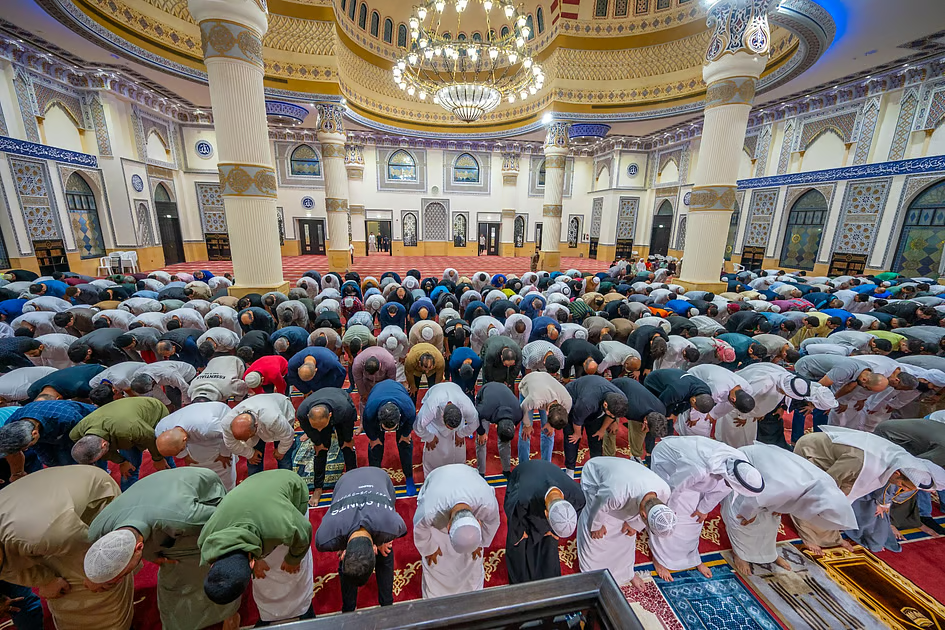
Taraweeh prayer holds great importance for Muslims during the holy month of Ramadan, observed globally as a month of fasting, spiritual reflection, and community. This additional prayer allows for deeper connection to faith and devotion through extended worship each night, making it a revered practice among millions. As Ramadan approaches, understanding the essence and significance of Taraweeh prayer becomes increasingly relevant.
The Essence of Taraweeh Prayer
Taraweeh, derived from the Arabic term meaning ‘to rest and relax’, is performed by Muslims after the obligatory Isha prayer. Traditionally, it involves reciting the Qur’an, enabling practitioners to deepen their relationship with the text. The prayer is established in different formats; while some individuals perform eight rak’ahs (units of prayer), others may extend it to twenty, depending on their local customs and personal choice.
The historical roots of Taraweeh can be traced back to the time of the Prophet Muhammad, who initially led the prayer in congregation. However, he later ceased leading due to the fear that it might become obligatory for his followers. Worshippers continue to perform it in mosques throughout Ramadan, both in congregation and individually at home. The collective experience fosters a sense of unity and strengthens community bonds.
Recent Developments and Observances
This year, the Taraweeh prayer has been conducted under evolving circumstances due to ongoing adjustments from the COVID-19 pandemic. Many mosques are implementing safety protocols while maintaining the tradition. For instance, some places are allowing limited numbers for in-mosque services while encouraging online streaming options to accommodate wider participation.
In addition, communities around the world are finding innovative ways to enhance the experience. Many mosques are organising nightly lectures, Qur’an recitation competitions, and community iftars, turning Taraweeh into not just a prayer, but a holistic spiritual experience that promotes learning, charity, and fellowship.
Conclusion
Taraweeh prayer is more than just a nightly ritual during Ramadan; it represents an opportunity for Muslims to elevate their spiritual practice, connect with their community, and deepen their faith. In light of the ongoing global challenges, the resilience and adaptation of practices such as Taraweeh remind us of the adaptable nature of faith. With early forecasts indicating robust attendance in mosques this Ramadan, the continuation and significance of Taraweeh serves as a testament to the unwavering devotion of Muslims worldwide. Ultimately, it enriches the Ramadan experience while fostering unity and spiritual growth among its practitioners.