Introduction
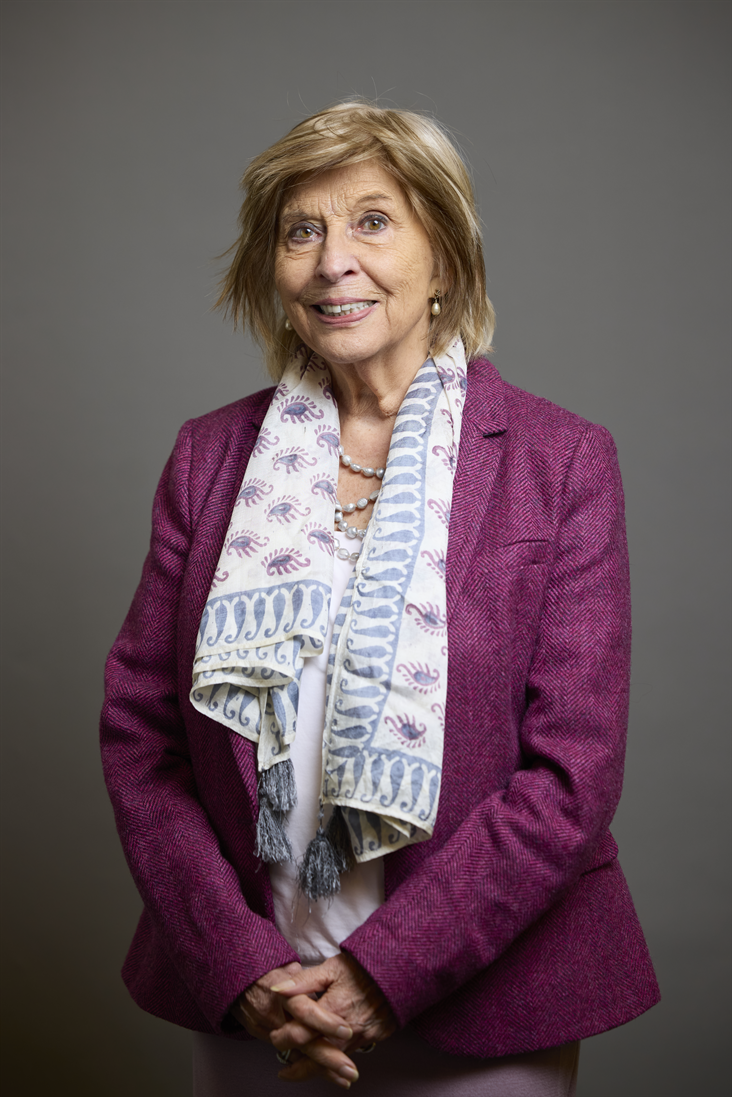
Baroness D’Souza, a prominent figure in British politics, continues to influence discussions on human rights and democracy. As a crossbench peer, her contributions within the House of Lords have been instrumental in shaping legislation and engaging in critical debates. D’Souza’s work reflects a growing recognition of the need for diverse voices in political discourse and the importance of advocacy on behalf of marginalized groups.
Baroness D’Souza’s Career and Contributions
Born in Zimbabwe, D’Souza moved to the UK, where she pursued an education in biology and later engaged in various roles, from academia to advocacy. She became a member of the House of Lords in 2011 and has since focused on issues such as civil liberties, international development, and the rights of refugees. Her notable contributions include chairing important committees and participating in debates that address pressing societal issues.
In particular, D’Souza has been a vocal opponent of policies perceived as discriminatory. Most recently, her critiques of the UK government’s handling of asylum seekers have garnered attention, particularly as the crisis deepens with the rising number of individuals seeking refuge from conflict and persecution. Through her work, she aims to uphold the UK’s commitment to international human rights standards.
Recent Developments and Initiatives
In 2023, Baroness D’Souza has been involved in various initiatives aimed at fostering dialogue around human rights in the wake of political turbulence both domestically and globally. She has been a part of forums discussing the implications of UK foreign policy on human rights, asserting that the nation must take a firm stance in defending these values.
Baroness D’Souza has also advocated for the importance of inclusive governance, arguing that diverse representation in politics enhances decision-making processes. Her leadership in various cross-party groups has aimed to ensure that the voices of underrepresented communities are included in legislative discussions.
Conclusion
Baroness D’Souza remains a vital force in the UK Parliament, championing the causes of human rights, social justice, and inclusive governance. As she continues to address key issues facing society, her role highlights the significant impact that dedicated individuals can have within political structures. The coming years will likely see her further advocating for policies that reflect the needs of a diverse population, as well as promoting international human rights in an increasingly complex global landscape.