Introduction
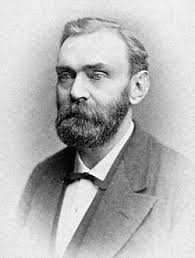
Alfred Nobel, a name synonymous with achievement and innovation, is best known for establishing the prestigious Nobel Prizes. His contributions to science, literature, and peace have left an indelible mark on the world. As we reflect on his legacy, understanding the man behind the prizes offers insight into his motivations and vision for humanity.
Early Life and Career
Born on October 21, 1833, in Stockholm, Sweden, Alfred Nobel was the third son of Immanuel Nobel, an engineer and inventor. After a childhood marked by his family’s financial struggles and his father’s eventual success in entrepreneurship, Alfred pursued studies in chemistry and engineering across Europe, which shaped his future innovations.
Invention of Dynamite
In 1867, Nobel patented dynamite, a groundbreaking development that revolutionised construction and demolition. However, this invention also had darker applications in warfare. Nobel’s complex feelings about his inventions intensified when he read a premature obituary labelling him the “merchant of death” after his brother Ludwig died. This engaging revelation triggered Nobel to contemplate how he would be remembered posthumously.
The Nobel Prizes
Motivated by his desire to improve his legacy, Nobel included in his will the establishment of the Nobel Prizes, which would reward significant contributions to humanity. In 1895, he declared that most of his fortune should fund the awards for Physics, Chemistry, Medicine, Literature, and Peace. Nobel passed away on December 10, 1896, but his vision for recognising excellence in these fields continues to inspire.
Impact and Legacy
Since the first awards were distributed in 1901, the Nobel Prizes have celebrated countless pioneers, including Marie Curie, Albert Einstein, and Malala Yousafzai. The prize not only acknowledges their accomplishments but also shines a spotlight on pressing global issues, from scientific advancements to humanitarian efforts. Nobel’s commitment to acknowledging peace efforts has profoundly influenced global politics and diplomacy.
Conclusion
Alfred Nobel’s legacy is a testament to the duality of innovation—capable of both destruction and uplifting humanity. Today, the Nobel Prizes remain the highest accolade in many fields, embodying Nobel’s belief in the potential for positivity in human endeavour. As we move forward, remembering and honouring his values can inspire current and future generations to contribute to global betterment, demonstrating the true spirit behind his gifts.



