Introduction
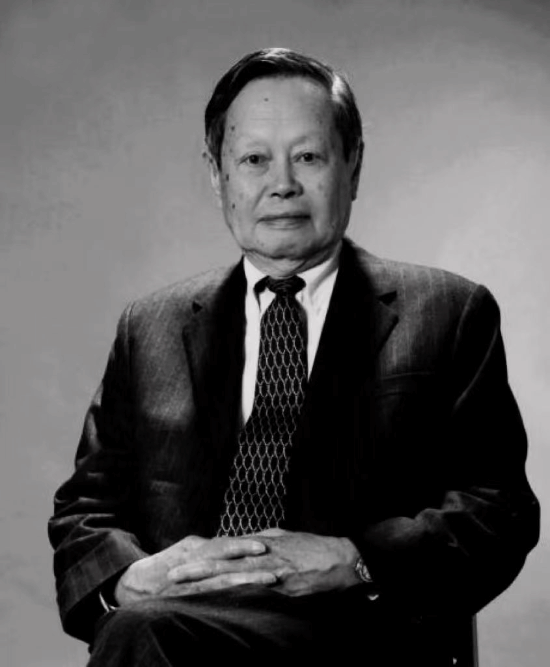
Yang Zhenning, also known as Chen-Ning Yang, is a prominent physicist recognised worldwide for his groundbreaking contributions to the field of theoretical physics. His life and work have not only reshaped academic thought but have also had significant implications for the understanding of particle physics and symmetry. As a Nobel laureate, Yang’s influence spans continents and generations, marking him as an essential figure in modern science.
Early Life and Education
Born on September 1, 1922, in Hefei, Anhui province, Yang grew up in a well-educated family, which fostered his interest in science from an early age. He excelled academically, earning a scholarship to attend National Central University, where he studied physics. In the 1940s, he moved to the United States to pursue his PhD at the University of Chicago, under the supervision of the notable physicist, Enrico Fermi. It was during these early years that Yang began to make significant strides in his research.
Nobel Prize in Physics
Yang’s groundbreaking work gained international recognition when he and fellow physicist Tsung-Dao Lee were awarded the Nobel Prize in Physics in 1957. Their work challenged the long-held belief in the conservation of parity in weak nuclear interactions, leading to a deeper understanding of the fundamental principles of particle physics. This discovery has had profound implications for the field, influencing decades of research and experimentation.
Later Career and Legacy
Following his notable achievements, Yang continued to contribute to the scientific community through teaching and research. He held positions at various prestigious institutions, including Princeton University and the Institute for Advanced Study. Furthermore, his involvement in scientific policy and education in China has helped bridge the gap between Eastern and Western scientific communities. Yang’s legacy is celebrated not only for his scientific contributions but also for fostering international collaboration in research.
Conclusion
Yang Zhenning remains a towering figure in the realm of physics, with a career that spans over seven decades. His contributions have laid foundational insights into the structure of matter and the universe. As scientific inquiry continues to evolve, Yang’s work will undoubtedly inform and inspire future generations of physicists. The significance of his achievements extends beyond academia, highlighting the importance of curiosity, perseverance, and international cooperation in the pursuit of knowledge.