Introduction
Thomas Tuchel has emerged as one of the leading figures in modern football management, known for his innovative tactics and ability to adapt to various challenges. His coaching career has witnessed significant successes across multiple leagues, making him a prominent name in the sport. As football continues to evolve, the strategies and philosophies championed by Tuchel are of great relevance to both aspiring coaches and football enthusiasts alike.
Early Career
Tuchel began his coaching journey in Germany, where he joined the Mainz 05 youth academy in 2000. After a successful stint with youth teams, he was appointed as Mainz’s head coach in 2009. During his tenure, he managed to secure the club’s highest-ever Bundesliga finish, showcasing his capability to develop talent and implement tactical schemes. His success at Mainz opened the door for further opportunities in more prestigious clubs.
Success at Borussia Dortmund
In 2015, Tuchel took the reins at Borussia Dortmund, where he was tasked with reviving a club that had faced challenges in performances and results. He led the team to a DFB-Pokal triumph in 2017 and achieved a second-place Bundesliga finish, playing an attacking brand of football that excited fans. His time at Dortmund was marked by the development of young talent like Christian Pulisic and Ousmane Dembélé, further solidifying his reputation as a nurturing coach.
Premier League Impact with Chelsea
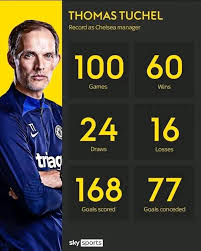
Tuchel’s career took a significant turn when he joined Chelsea FC in January 2021. Assuming control in the midst of a turbulent season, he swiftly turned the team’s fortunes around. Under his management, Chelsea not only climbed the Premier League standings but also clinched the UEFA Champions League title in May 2021, defeating Manchester City in the final. His pragmatic approach and flexibility in tactics proved crucial in navigating the challenges of top-flight football.
Current Developments
As of October 2023, Thomas Tuchel’s influence continues to shape the landscape of football, particularly after his recent move to manage Bayer Munich. His appointment is seen as a significant step in reinvigorating the club as they aim to reclaim their dominant status in German football and make an impact in European competitions.
Conclusion
Thomas Tuchel’s journey as a football manager exemplifies dedication, innovation, and adaptability. His unique coaching philosophy and achievements underscore why he is viewed as one of the elite coaches in the game today. With his current trajectory, Tuchel is likely to leave a profound impact on football, inspiring future generations of coaches while challenging conventional tactics within the sport.



