Introduction
Kayla Harrison has emerged as one of the most significant figures in mixed martial arts (MMA) in recent years. As a two-time Olympic judo gold medalist and a leading competitor in professional MMA, her journey is not just about her impressive accomplishments but also about the barriers she has overcome as a woman in a predominantly male sport. Harrison’s story resonates widely, inspiring young athletes and advocating for women’s rights in sports.
The Rise of Kayla Harrison
Born on February 2, 1990, in Burlington, Ohio, Harrison began her athletic career in judo, where she quickly rose through the ranks, culminating in her historic performances at the 2012 and 2016 Olympics. After securing her second Olympic gold, she transitioned into MMA in 2018. Training at American Top Team, she soon became a breakout star in the sport.
Early Career Highlights
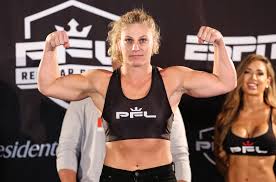
Harrison made her professional debut in June 2018 and quickly established herself as a formidable competitor, finishing her first five fights with diverse skill and determination. She signed with the Professional Fighters League (PFL) and made history by winning the PFL Women’s Lightweight Championship in both 2019 and 2021. Her achievements in the PFL have solidified her position as a dominant force, with an undefeated record in the promotion and a blend of striking and grappling skills.
Recent Developments
Most recently, in August 2023, Harrison defended her title and showcased her continued evolution as a fighter. Her impressive performances have not only earned her accolades but have also opened the door for increased visibility for women in combat sports, drawing attention from mainstream media and fans alike. Recently, she also announced her participation in a high-profile fight scheduled for late 2023, which has garnered extensive media coverage and fan anticipation.
Impact on Women’s Sports
Harrison’s impact extends beyond her professional achievements. She is a vocal advocate for addressing issues of abuse and harassment in sports, sharing her own experiences to empower other athletes. Her advocacy work has contributed to crucial conversations about safety and respect in athletics, encouraging future generations of female fighters to pursue their dreams.
Conclusion
As Kayla Harrison continues to dominate in the MMA arena, her story serves as a beacon of hope and inspiration. The combination of her athletic prowess and commitment to advocacy makes her a significant figure in sports history. Looking ahead, Harrison’s influence is likely to grow not only in combat sports but also in broader societal conversations about equality and opportunity for women. Her journey reiterates the importance of resilience, determination, and the fight for a more inclusive athletic landscape.



