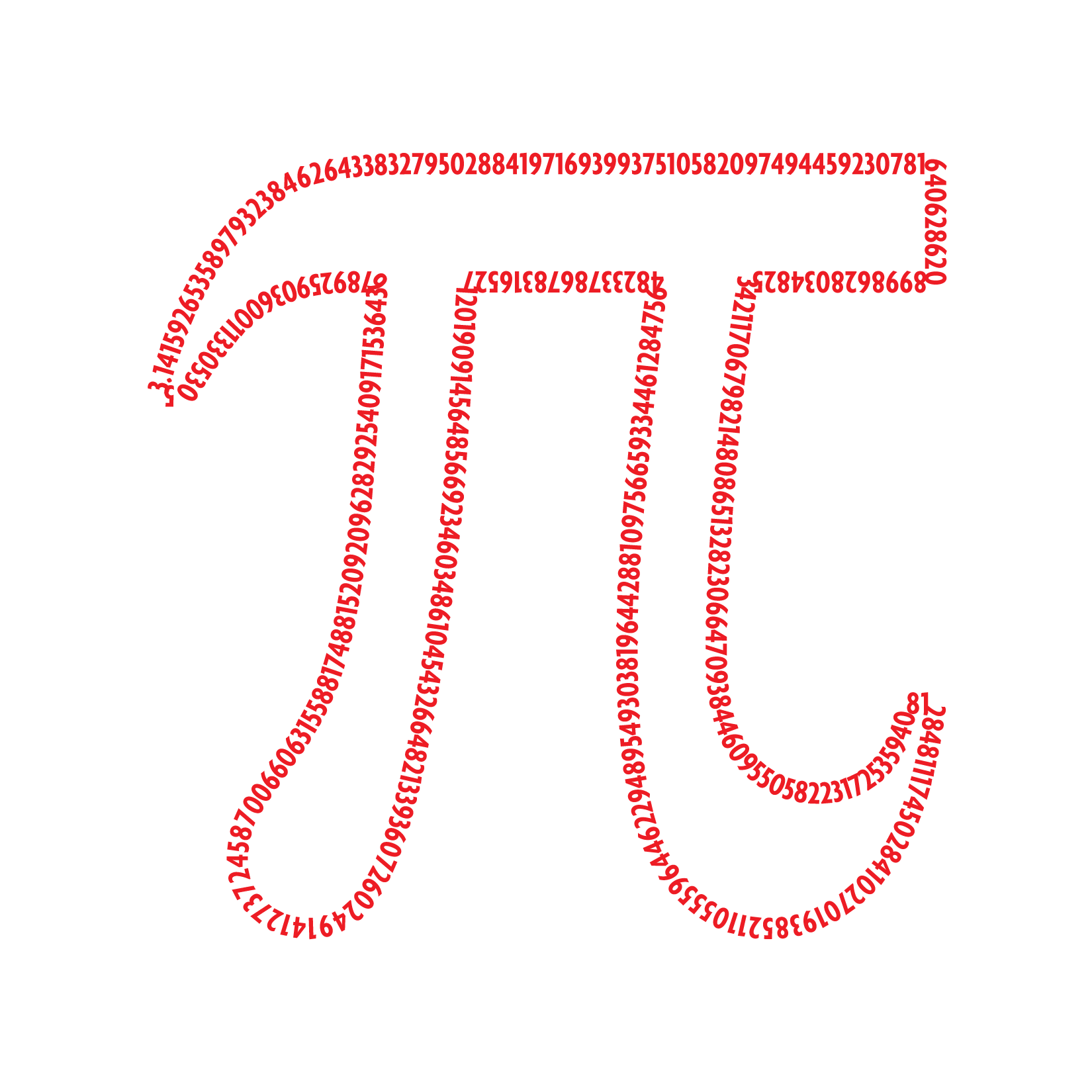
Introduction to Pi
Pi (π) is a mathematical constant representing the ratio of a circle’s circumference to its diameter. Its value is approximately 3.14159, but as an irrational number, it cannot be expressed exactly as a simple fraction.
The significance of pi transcends mere geometry; it appears in various equations and fields ranging from physics to engineering. Pi’s importance in mathematics cannot be overstated, as it serves as a fundamental building block in numerous theories and calculations.
Historical Background
Throughout history, many cultures have attempted to calculate pi with increasing accuracy. The ancient Egyptians and Babylonians had approximations, but it wasn’t until the 16th century that mathematicians like Ludolph van Ceulen computed pi to 35 decimal places, leading to its nickname, ‘Ludolphine number.’
Applications of Pi
In modern mathematics and physics, pi takes centre stage in areas such as trigonometry, calculus, and complex number theory. For instance:
- In geometry, pi is crucial for calculating the area (A = πr²) and circumference (C = 2πr) of circles.
- In calculus, pi frequently appears in integrals and series containing circular or periodic functions.
- In engineering, pi is critical in understanding wave mechanics and oscillations found in sound and light.
The Cultural Significance of Pi
Beyond its mathematical applications, pi has found its way into popular culture. Pi Day is celebrated on March 14 (3/14) each year, and this day encourages mathematical curiosity among students and the general public alike. Many schools and communities host pie-eating contests and mathematical challenges to mark the occasion.
Conclusion and Future Outlook
As we continue to delve deeper into the realms of mathematics and science, the significance of pi is likely to grow. Its presence in emerging fields, such as quantum computing and artificial intelligence, illustrates its timeless relevance. Understanding pi not only enriches our knowledge base but also enhances our appreciation for the intricate patterns that govern the universe.
In conclusion, pi is more than just a number; it is a gateway to understanding the natural world and a cornerstone of mathematical principles that will continue to mesmerise future generations.



