Introduction
The FTSE 100 Index, a crucial benchmark for the London Stock Exchange, represents the 100 largest companies listed on the exchange by market capitalisation. As a key indicator of the UK’s economic health, the performance of the FTSE 100 Index is closely monitored by investors, analysts, and financial institutions. Understanding its fluctuations is essential for making informed investment decisions and assessing market sentiment.
Current Performance and Recent Developments
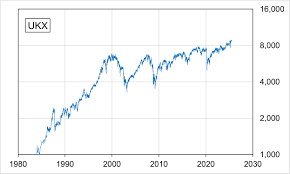
As of October 2023, the FTSE 100 Index has experienced notable volatility amid broader economic challenges, including inflation pressures, geopolitical tensions, and changes in monetary policy. The index recently peaked at an all-time high of 7,700 points earlier in the year but has faced fluctuations due to investor sentiment surrounding interest rate hikes and their potential impact on corporate earnings.
Key sectors contributing to the FTSE 100’s performance include energy, financials, and consumer goods. For instance, leading companies such as Unilever, BP, and HSBC have shown resilience despite the macroeconomic challenges. Moreover, energy firms have benefited from rising oil and gas prices, further bolstering the index. However, technology stocks, often more reactive to changes in interest rates, have struggled to maintain momentum.
The Significance for Investors
The importance of the FTSE 100 Index extends beyond mere numbers; it serves as a foundational element for many investment strategies. Many pension funds, mutual funds, and exchange-traded funds (ETFs) are constructed with the FTSE 100 as a central component, making it a barometer for UK stock market health. Understanding its trends assists investors in gauging market sentiment and adjusting their investment strategies accordingly.
Moreover, the index has implications for foreign investors looking to enter the UK market. Due to its international exposure, with many companies generating substantial revenue overseas, the FTSE 100 offers a diversified investment option that can hedge against domestic economic volatility.
Conclusion
In conclusion, the FTSE 100 Index remains a vital indicator of the UK economy, influencing investment strategies and reflecting the sentiment of both domestic and international investors. Observing its performance in the coming months will be crucial as the index navigates economic uncertainties and potential policy changes. With rising inflation and interest rate decisions on the horizon, the FTSE 100’s trajectory will provide valuable insights for investors aiming to adapt to evolving market conditions. This benchmark will continue to play a significant role in shaping the financial landscape as we approach the end of 2023.