Introduction
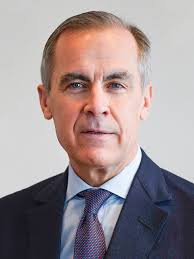
Mark Carney, the former Governor of the Bank of England (BoE) and the Bank of Canada, has been a significant figure in global finance, particularly highlighting issues around climate change and economic policy reform. His leadership and insights have initiated important conversations regarding the future of financial systems amidst changing global dynamics.
Career Highlights
Carney’s ascent in the financial world began as an economist at Goldman Sachs before moving on to serve as Deputy Governor of the Bank of Canada in 2009. He became Governor of the Bank of Canada in 2013 and subsequently the BoE in 2013, making him the first overseas appointment for the UK central bank. During his tenure, he was praised for his work on the 2008 financial crisis recovery and his innovative approaches to monetary policy.
Climate Change Advocacy
Under Carney’s leadership, the Bank of England introduced several measures to incorporate climate risks into financial regulations. He famously remarked, “The time for action is now on climate change,” pushing financial institutions to assess and disclose their exposure to climate-related risks. In 2020, he launched the “Task Force on Climate-related Financial Disclosures” (TCFD), aiming to create a framework for companies to report climate-related financial information.
Current Role and Views
Post his tenure at the BoE, which concluded in March 2020, Carney has continued to influence global discussions as the United Nations Special Envoy on Climate Action and Finance. In this position, he works towards integrating sustainability into the global financial system. His views on digital currencies have also garnered attention, where he has encouraged central banks to explore the advantages of central bank digital currencies (CBDCs).
Conclusion
Mark Carney’s influence extends beyond the traditional realms of banking and finance; he highlights the interconnectedness of economic policy and global challenges like climate change. As the global economy continues to evolve, the lessons and frameworks introduced by Carney are likely to remain crucial for both policymakers and financial institutions in their quest for a more sustainable and resilient economic future. His advocacy for integrating environmental considerations into finance could well shape the direction of global financial policies in the upcoming decade.