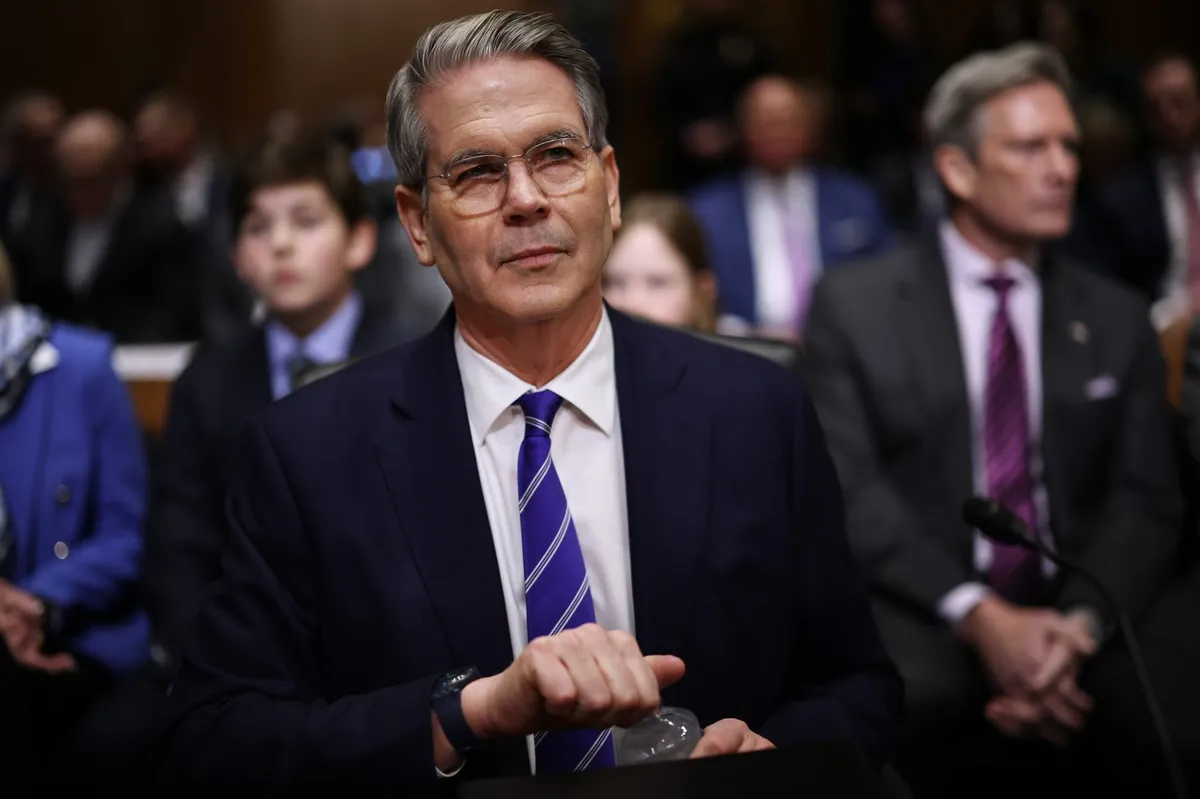
In a significant move, Scott Bessent, the US Treasury Secretary, has urged the Federal Reserve to hold off on lowering interest rates, citing the ongoing Iran war and its potential impact on economic stability. Bessent emphasized the strength of the US economy in the early months of the year, stating, “If ever there was ‘Team Transitory,’ it’s this.” He believes that the current economic landscape requires careful monitoring before making any drastic changes to monetary policy.
Recent data shows that consumer prices have risen by 0.9% month-over-month, marking the largest increase in nearly four years. Excluding food and energy, inflation has increased by 0.2% month-over-month and 2.6% year-over-year. This surge in prices has raised concerns about the sustainability of the economic recovery.
In a related effort to address emerging threats, Bessent and Jerome Powell, the Federal Reserve Chair, convened a meeting with CEOs from major banks, including Citigroup, Morgan Stanley, Bank of America, Wells Fargo, and Goldman Sachs. The discussion focused on cybersecurity risks associated with Anthropic‘s AI model, which has identified thousands of vulnerabilities across key operating systems and web browsers.
The Pentagon has classified Anthropic’s AI as a national security risk, underscoring the urgency of addressing these vulnerabilities. Notably, JPMorgan CEO Jamie Dimon was unable to attend the meeting, raising questions about the bank’s stance on these critical issues.
Bessent’s remarks reflect a broader concern about balancing economic growth with the need for stability in the face of rising inflation and cybersecurity threats. He stated, “I think we will look back and say — I don’t know the number of days, whether it’s 50 or 100 or more — for 50 years of stability.” This perspective highlights the importance of a cautious approach as the nation navigates these complex challenges.
As the situation evolves, the Treasury Secretary’s call for patience may shape the Federal Reserve’s decisions in the coming months. The interplay between economic indicators and geopolitical factors will be crucial in determining the future direction of interest rates.
Details remain unconfirmed regarding the long-term implications of these discussions and the potential actions from the Federal Reserve. The community will be watching closely as developments unfold in the coming weeks.