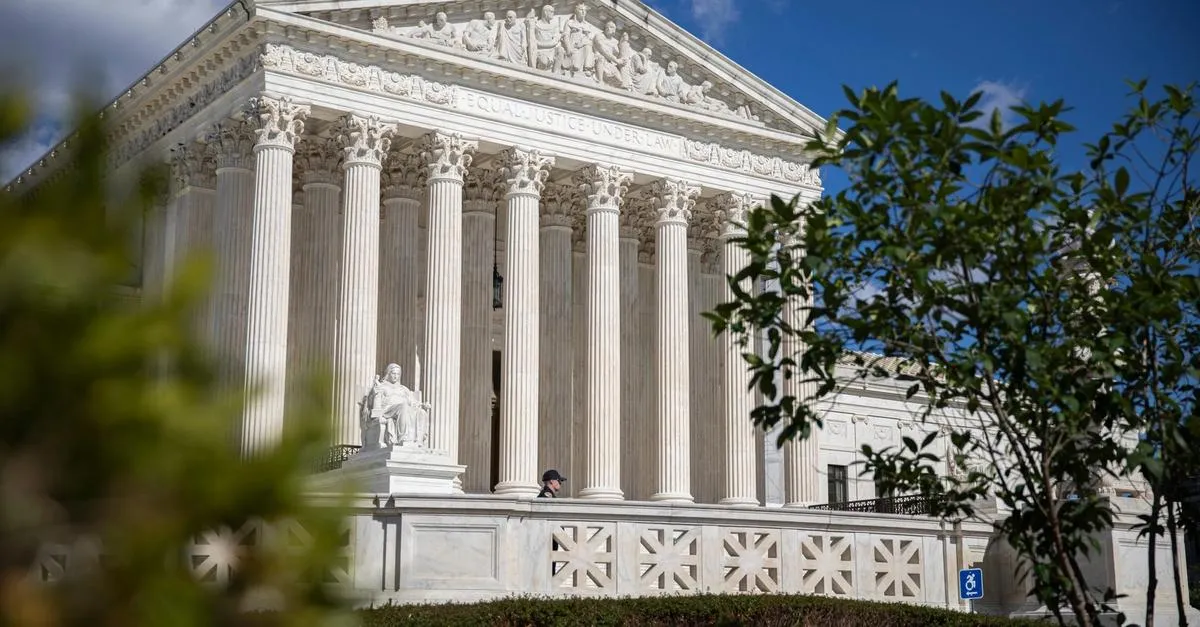
On May 5, 2026, the Supreme Court delivered a significant ruling that reshaped Louisiana’s congressional map. Justice Samuel Alito authored a concurring opinion that sharply criticized Justice Ketanji Brown Jackson’s dissent. This decision not only affects Louisiana but also raises questions about the future of redistricting across the nation.
The court voted 6-3 to finalize its opinion in the case of Louisiana v. Callais, which struck down the existing congressional map. The ruling allows Louisiana to redraw its district lines in time for the upcoming elections, set for 2026.
Jackson stood alone as the dissenting voice, arguing that the court’s decision “has spawned chaos in the State of Louisiana.” She expressed concerns about how this ruling would impact minority representation, particularly regarding Section 2 of the Voting Rights Act.
In his response, Alito described Jackson’s dissent as “baseless and insulting.” He emphasized that her claims about the ruling representing an unprincipled use of power were unfounded. He stated, “The dissent goes on to claim that our decision represents an unprincipled use of power. It is the dissent’s rhetoric that lacks restraint.” This exchange illustrates a growing ideological divide within the Supreme Court.
The new congressional map is expected to favor Republicans, who currently hold four out of six congressional seats in Louisiana. The state legislature plans to include one majority-Black district in its proposed map, which contrasts with the two majority-Black districts in the current configuration.
The court also allowed Louisiana to bypass the usual 32-day waiting period before certifying a ruling, expediting the process amidst ongoing litigation. Lawsuits have already emerged challenging the postponement of Louisiana’s primary election scheduled for May 16.
This ruling will likely have broader implications beyond Louisiana, especially as states grapple with redistricting following census data. Advocates for voting rights are closely monitoring how these developments unfold and their potential effects on minority voters nationwide.