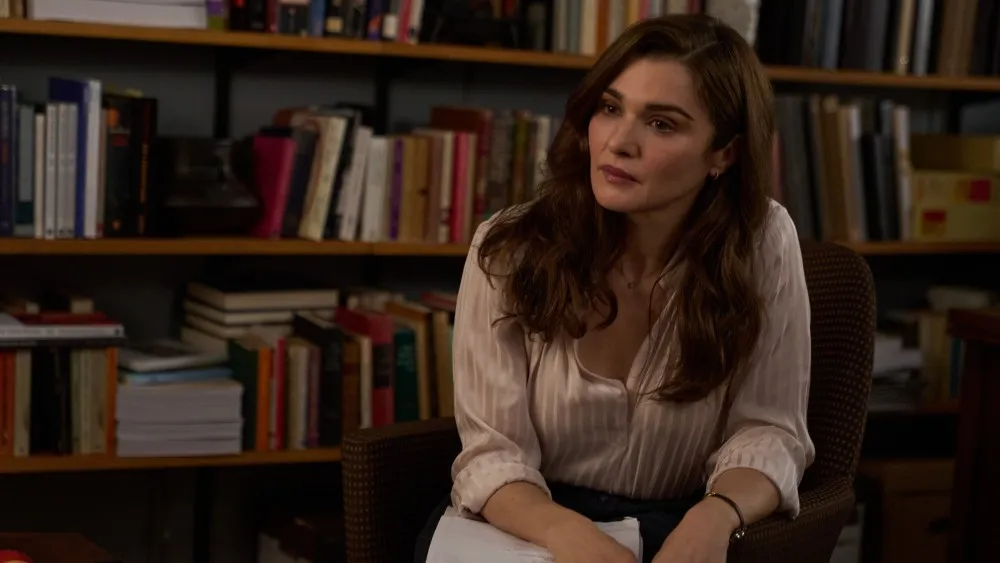
Before ‘Vladimir’
Prior to the release of ‘Vladimir’, Rachel Weisz was already a well-established actress known for her versatile roles in films such as ‘The Favourite’ and ‘The Constant Gardener’. Her performances often highlighted strong, complex female characters, but the public perception of her work was largely centered around traditional narratives of love and sacrifice. The expectation was that Weisz would continue to take on roles that emphasized her dramatic range while adhering to the conventional portrayals of women in film.
A Decisive Moment
However, with the release of ‘Vladimir’ on March 5, 2026, Weisz’s career trajectory took a notable turn. The series, based on Julia May Jonas’s 2022 novel, presents a more provocative exploration of female desire and sexuality. In this limited series, Weisz plays the unnamed protagonist, a college professor who becomes consumed by her obsession with a married colleague named Vladimir. This character’s journey reflects a deep-seated struggle with aging and relevance, as she grapples with her fading desirability in a society that often overlooks older women.
Immediate Effects
The immediate impact of ‘Vladimir’ on Weisz’s career is significant. Critics have drawn comparisons to the acclaimed series ‘Fleabag’, though some have noted that ‘Vladimir’ does not quite reach the same heights. Nonetheless, the show has sparked conversations about female sexuality and the complexities of desire, particularly as they relate to aging. Weisz’s portrayal of the protagonist’s inner thoughts through direct confessions adds a layer of intimacy and vulnerability, allowing audiences to connect deeply with her character’s struggles.
Expert Perspectives
Experts in the field of gender studies and media representation have weighed in on the series, noting its relevance in today’s cultural landscape. Julia May Jonas, the author of the original novel, expressed her hope that the series would resonate as a “slow burn” that invites viewers to empathize with the protagonist’s experience. She remarked, “I get asked about this all the time — not necessarily this, but, you know, ’50-year-old women are sexy now, what’s the trend?'” This highlights a growing recognition of the complexities of female desire, especially as women age.
Character Dynamics
In ‘Vladimir’, Weisz’s character is not alone in her struggles. John Slattery plays her husband, John, who faces disciplinary action for an inappropriate relationship, adding another layer of tension to the narrative. The series delves into the dynamics of their marriage, exploring how desire and betrayal intersect in the lives of its characters. The protagonist’s fantasies about Vladimir, a married man, further complicate her emotional landscape, raising questions about morality and longing.
Comparative Analysis
While ‘Vladimir’ has been met with mixed reviews, it undeniably contributes to a broader dialogue about the representation of women in media. The series challenges traditional narratives by placing a middle-aged woman at the center of a story that explores her sexual agency. This shift is crucial in a landscape where female characters are often relegated to supporting roles or simplistic arcs. As Weisz navigates this complex character, she embodies a new archetype of the academic heroine, one that resonates with many viewers who see their own experiences reflected in her struggles.
As Rachel Weisz continues to evolve as an actress, ‘Vladimir’ marks a pivotal moment in her career, showcasing her ability to tackle challenging and nuanced roles. The series not only highlights her talent but also opens up important conversations about aging, desire, and the female experience in contemporary society. With its release, Weisz reaffirms her position as a leading voice in the exploration of complex female narratives, inviting audiences to engage with the intricacies of desire and identity.