In the heart of Washington, DC, discussions have recently turned to the historical significance of Pearl Harbor, a moment that reshaped global dynamics. Before this development, the prevailing expectation was that the lessons from the past would guide current diplomatic and military strategies, particularly in the context of rising tensions in the Middle East.
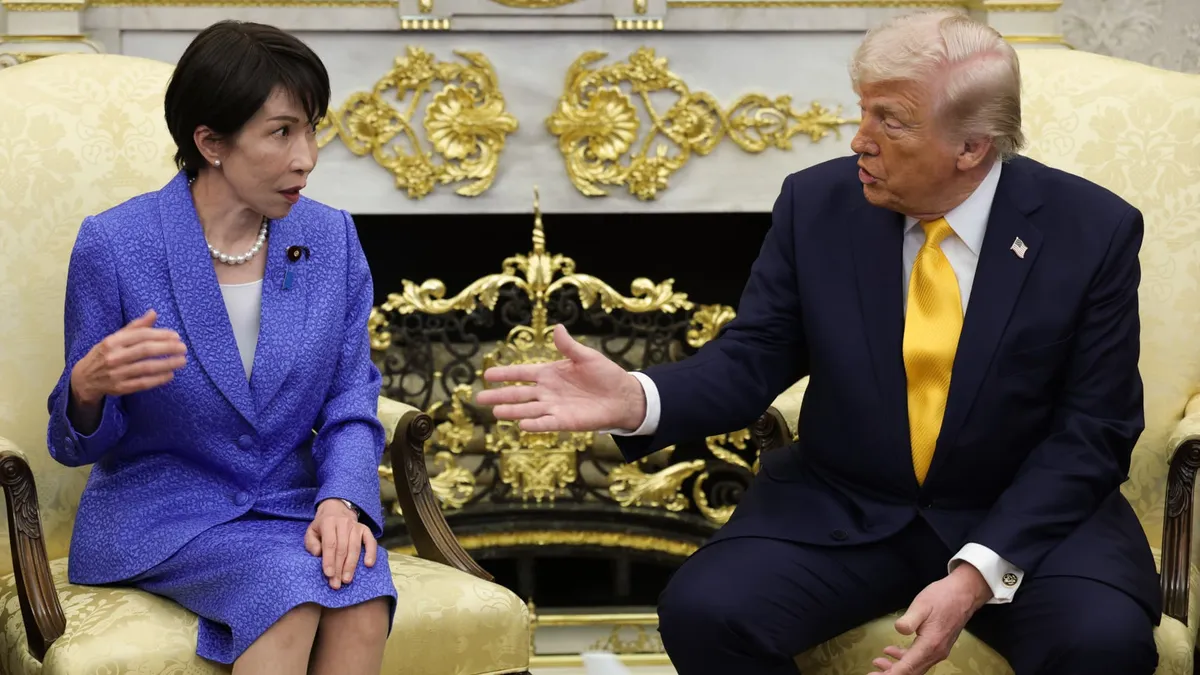
However, a decisive moment occurred when former President Donald Trump referenced Pearl Harbor during a meeting with Japan’s Prime Minister Sanae Takaichi. This unexpected mention brought the historical event back into the spotlight, contrasting sharply with the current geopolitical landscape.
The surprise Japanese attack on Pearl Harbor in 1941 resulted in over 2,400 deaths, marking a pivotal point in U.S. history that led to its entry into World War II. Trump’s comments about surprise attacks drew a parallel to recent military actions involving Iran, where he stated that the U.S. did not inform its allies to maintain the element of surprise. “Who knows better about that? Why didn’t you tell me about Pearl Harbor? You believe in surprise much more so than I,” Trump quipped, highlighting the ongoing relevance of historical events in contemporary discussions.
In response, Takaichi emphasized Japan’s commitment to peace, stating there were no plans to deploy naval vessels to the Middle East. Japan’s Self-Defense Forces operate under a pacifist constitution that renounces war, showcasing a stark contrast to the aggressive military posturing seen elsewhere.
The direct effects of these discussions extend beyond mere rhetoric. Japan’s role in securing the Strait of Hormuz has been praised by Trump, yet the country remains cautious about military involvement. Meanwhile, Germany and France have publicly declared their non-participation in military actions related to the Iran conflict, further complicating the international response.
Experts note that the historical context of Pearl Harbor serves as a reminder of the complexities of surprise in military strategy. Boris Pistorius, a German official, stated, “This is not our war; we have not started it,” emphasizing the reluctance of many nations to engage in conflicts that do not directly concern them.
Friedrich Merz echoed this sentiment, declaring, “We have declared that as long as the war continues, we will not participate in ensuring freedom of navigation in the Strait of Hormuz, for example, by military means.” This highlights a growing trend among nations to prioritize diplomatic solutions over military interventions.
As the world watches these developments unfold, the echoes of Pearl Harbor remind us of the delicate balance between historical lessons and current geopolitical realities. Details remain unconfirmed regarding the full implications of these discussions, but the dialogue continues to evolve.