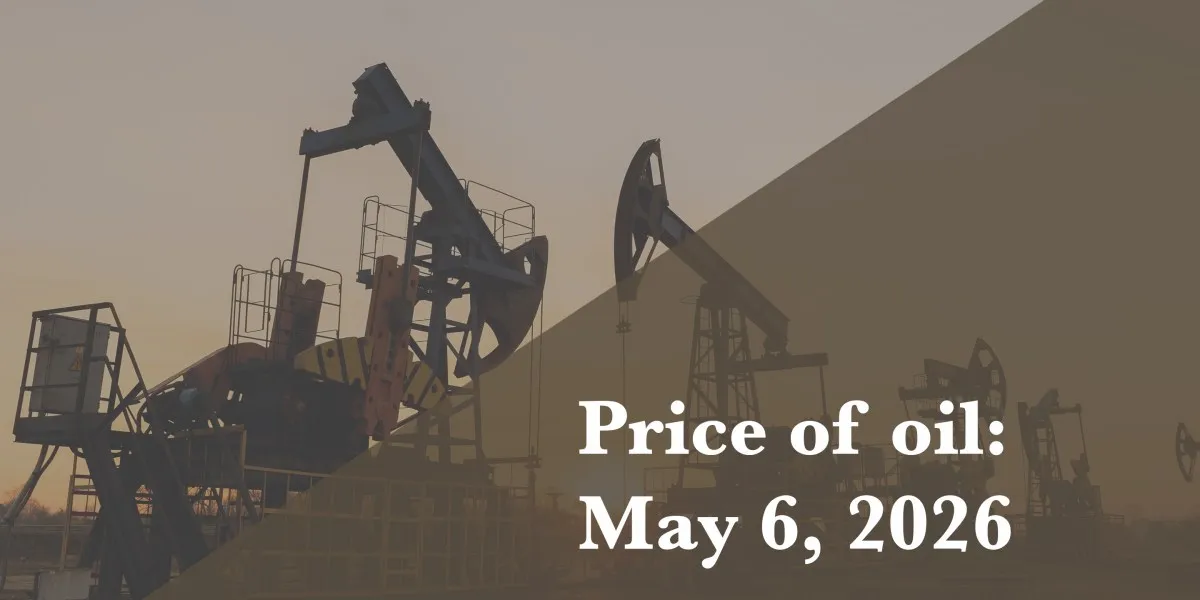
On May 6, 2026, oil prices experienced a dramatic shift as reports surfaced about a potential deal to end the ongoing war with Iran. This development sent shockwaves through the oil market, leading to a sharp decline in prices. The price of oil now sits at $106.52 per barrel, down from yesterday’s figures.
The immediate impact was striking. U.S. crude oil plunged by as much as 15%, dropping to $88 per barrel, while international Brent crude oil saw an 11% decrease, falling to $96 per barrel. These fluctuations reflect how sensitive the oil market is to geopolitical events.
Consumers are already feeling the effects. Wholesale gas prices dropped by 7%, and heating oil—often used as a proxy for jet fuel—fell by 8%. However, despite this drop, the average retail gas price in the U.S. surpassed $4.50 per gallon for the first time since July 2022.
While these changes bring some relief to consumers, they also highlight a broader issue: oil prices remain significantly higher than before the US-Israel war with Iran, which had seen them hover around $70 a barrel. Experts note that this ongoing volatility in the oil market can lead to uncertainty for both consumers and businesses alike.
Key statistics:
- The price of oil decreased by $10.03 since yesterday morning.
- Oil is still roughly $44 more than at this time last year.
- The average U.S. retail gas price is now over $4.50 per gallon.
Economists and market analysts are closely monitoring these developments. One expert noted, “Markets had reacted swiftly to the initial report, sending the price of U.S. crude oil plunging by as much as 15% to $88 per barrel.” This rapid response underscores how interconnected global events are with local economies.
As discussions continue regarding peace in Iran, many are left wondering how these negotiations will further influence both local and global markets. Oil prices remain high compared to previous years, indicating that while some relief may be on the horizon, challenges persist for consumers and businesses alike.
Ultimately, this situation illustrates just how much geopolitical dynamics can sway everyday life—from what we pay at the pump to broader economic conditions across communities.